
The name Surender Koli has been tied to one of India’s most disturbing criminal cases—the Nithari killings. For nearly two decades, the case remained a symbol of horror, public anger and judicial complexity. But the recent decision of the Supreme Court to grant bail and uphold Koli’s acquittal in multiple cases has once again pushed the spotlight on this controversial chapter of criminal justice.

This article breaks down the latest Surender Koli bail news, the reasons behind the verdict, the reactions surrounding it, and what it means for India’s investigative and judicial systems. Written for truthfrontier.com, this analysis uses WhatsApp-safe bold headings to maintain formatting across platforms.
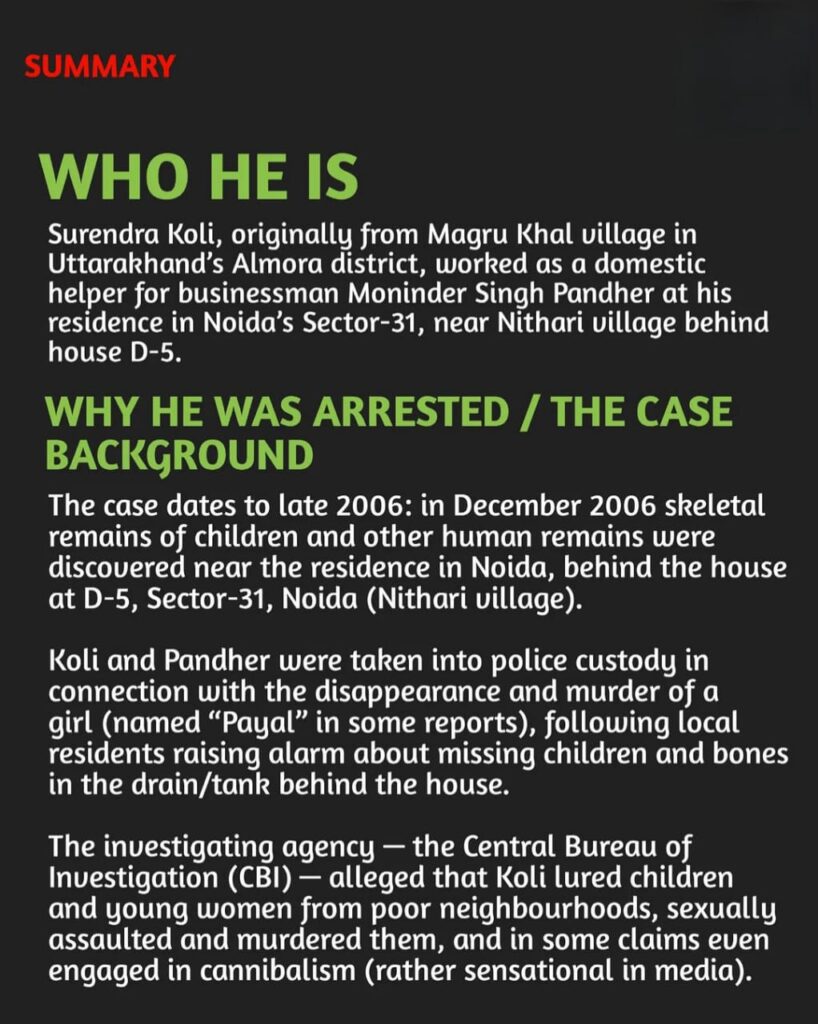
Background: Who Is Surender Koli and Why Was He Convicted?
In the mid-2000s, villagers in Nithari, near Noida, complained about missing children. When police investigated, they discovered human remains in drains and near the home of businessman Moninder Singh Pandher, where Koli worked as a domestic helper. What followed was a media firestorm, a political uproar, and a rapid chain of legal actions that turned Koli into a national villain.
He was accused of:
Murder
Sexual assault
Cannibalism (a claim never conclusively proven)
Disposal and mutilation of bodies
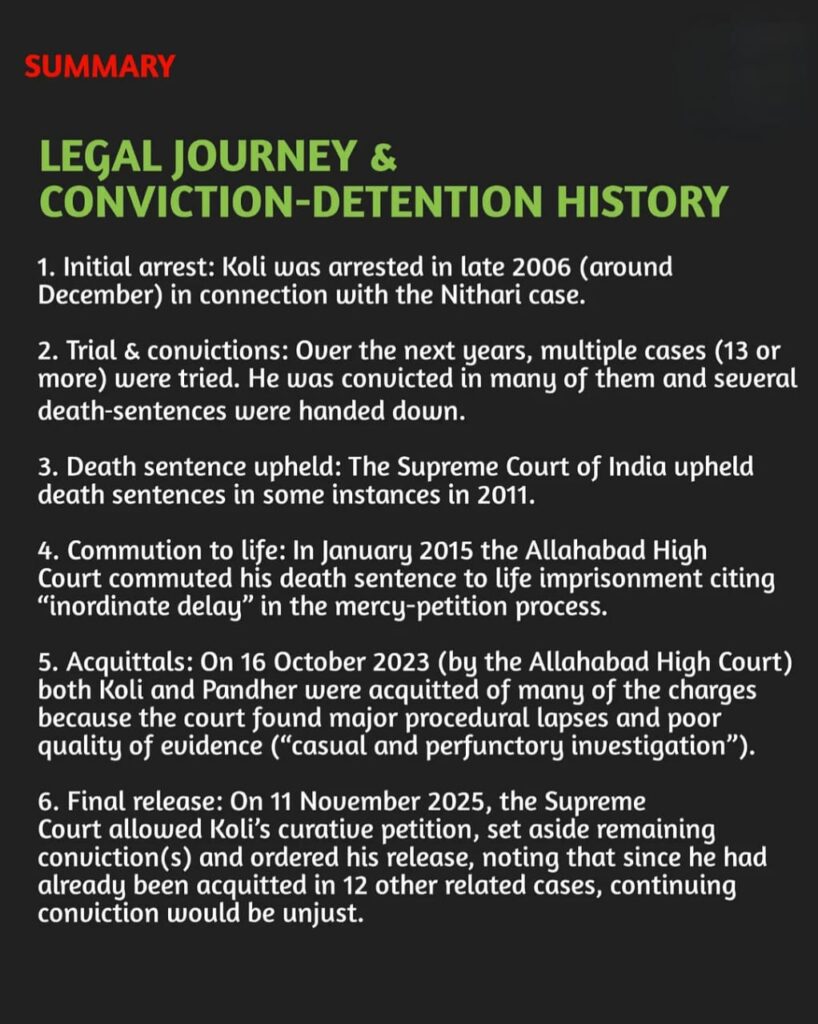
Multiple CBI court verdicts sentenced him to death in several cases. His image became synonymous with brutality, and the public narrative was largely built on shock, sensationalism, and limited verified evidence.
Supreme Court’s Latest Decision: Why Koli Received Bail
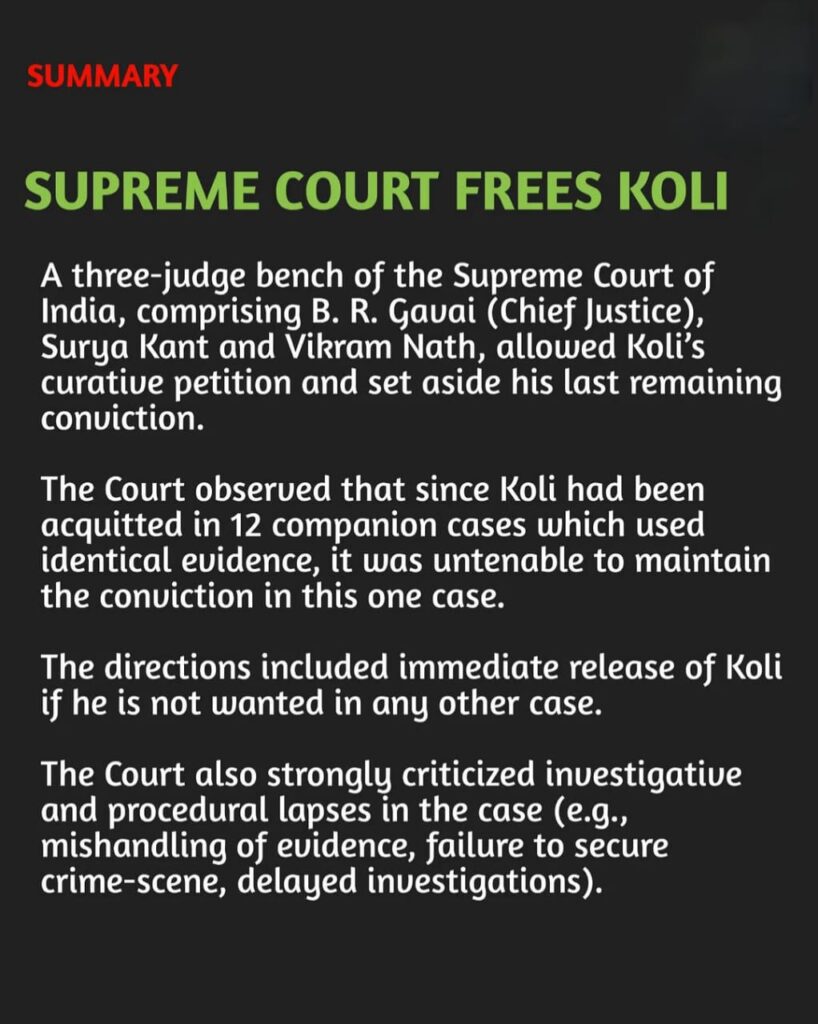
The Surender Koli bail news gained national prominence when the Supreme Court upheld the Allahabad High Court’s earlier decision to acquit him in several cases due to lack of sufficient evidence.
The bail was granted primarily because:
- Evidence was poorly collected
- Confessional statements were deemed unreliable
- Links between recovered remains and Koli were legally inadequate
- Due process was compromised during investigation
- Several forensic gaps weakened the prosecution’s narrative
The Supreme Court highlighted that criminal convictions cannot be based on emotional assumptions, no matter how horrific the allegations appear. It reiterated that the Constitution requires evidence to meet the highest threshold—proof beyond reasonable doubt.
Why the Court Questioned the Investigation
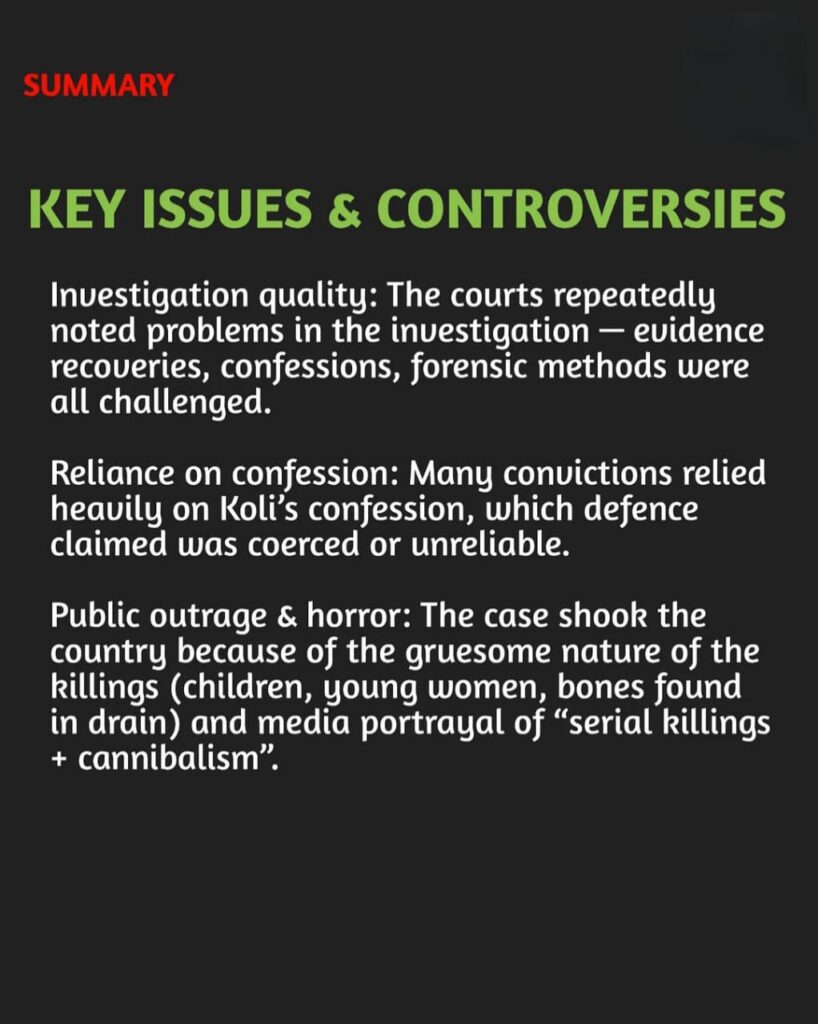
Faulty Forensics
One of the major concerns raised by the court was the improper handling of recovered body parts. The chain of custody—vital in criminal cases—was broken. Several remains were not conclusively matched with victims, and some were found in locations accessible to multiple people, not just Koli.
Inconsistent Confessions
Koli’s alleged confession was taken under questionable circumstances. Without proper recording procedures, the confession lacked legal strength. Under Indian law, confessions must be voluntary, properly documented, and corroborated by independent evidence.
Bias and Public Pressure
The bench acknowledged that extreme public pressure may have influenced the early stages of the investigation. Koli, a poor domestic worker, lacked resources for legal representation, making him a vulnerable suspect during the initial interrogations.
Reactions Across India: Relief, Anger, Confusion
Mixed Reactions in His Village
In Koli’s native village in Uttarakhand, many residents expressed relief and said they always believed he was framed. However, this relief comes with sadness—his mother died waiting for the court to clear his name, and his childhood house now lies in ruins.
Victims’ Families Feel Betrayed
For the families whose children went missing, the Supreme Court order was a painful reminder that justice in India can be slow, uncertain and at times, disappointing. Many believe the system failed them twice—first during the crime, and now during the verdict.
Human Rights Groups Welcome the Decision
Several legal activists argue that the ruling exposes deep flaws in India’s investigative framework. They say the judgment reinforces the importance of fair trials, especially in emotionally charged cases where media narratives can overshadow facts.
Legal Significance: What the Judgment Means for India
Higher Standards for Evidence
The verdict sends a strong message:
Courts will not uphold convictions based solely on public outrage or weak forensics.
Accountability for Investigative Agencies
The Nithari investigation now stands as a cautionary tale. It demonstrates how investigative errors can not only ruin lives but also allow actual perpetrators (if different) to escape justice.
Potential Changes to Criminal Procedure
Legal experts believe that this case may push reforms in:
Forensic science infrastructure
Rules for recording confessions
Handling of sensitive media-covered crimes
Training of investigation officers
What This Means for Surender Koli’s Future
Freedom After Years of Isolation
Koli spent nearly two decades in prison. Even though he has walked out legally free, rebuilding a life from scratch will be extraordinarily difficult. He has lost family members, his home, and almost all social ties.
Will He Seek Compensation?
Legal analysts believe Koli may have grounds to seek compensation for wrongful incarceration. However, such cases are rare in India, and the process can be lengthy.
A Life Under Permanent Public Scrutiny
Even after acquittal, public memory of the Nithari case may follow him throughout his life. For many, he will continue to be a symbol of the case—not because of proven guilt, but because of how deeply the incident shook the nation.
Was Justice Served? A Question Without a Simple Answer
The Surender Koli bail news has opened an old debate:
Is justice about punishing someone, or punishing the right person?
While the Supreme Court restored the principle of fair trial, victims’ families remain in search of closure. The case reflects the fragile balance between crime, justice, public emotion, and legal proof.
Conclusion
The Supreme Court’s decision to grant bail and uphold acquittal for Surender Koli marks a moment of reflection for India’s justice system. It challenges investigators, courts, and the public to think beyond headlines and focus on facts. Whether one agrees or disagrees with the verdict, it undeniably forces the nation to confront uncomfortable truths about how criminal cases are handled, sensationalized and judged.