
The Eternal Light of Sacrifice: Guru Tegh Bahadur Ji’s Martyrdom That Saved Faith”
The Martyrdom Event of Guru Tegh Bahadur Ji — A Sacred Legacy of Courage and Faith
Guru Tegh Bahadur Ji, the ninth Sikh Guru, is remembered across the world as Hind Di Chadar — The Shield of India. His martyrdom on 24 November 1675 in Delhi stands as one of the most powerful examples of sacrifice for religious freedom, not only in Sikh history but in world history.
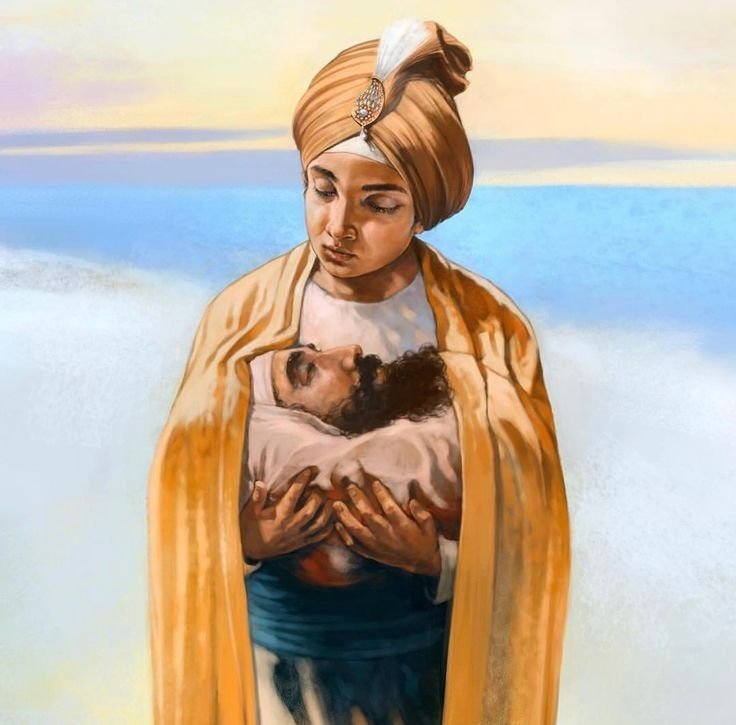
Early Life and Spiritual Strength of Guru Tegh Bahadur Ji
Guru Tegh Bahadur Ji was born on 1 April 1621 in Amritsar to Guru Hargobind Sahib Ji and Mata Nanaki Ji. His childhood name was Tyag Mal, but due to his unmatched bravery in battle, he was given the name Tegh Bahadur, meaning Brave of the Sword.
A Life Devoted to Meditation and Humanity
Even though he was a warrior, Guru Ji’s heart was rooted deeply in spirituality, humility, and compassion. He spent many years meditating in Bakala and guiding people toward peace and righteousness.
The Religious Crisis of 1675 — The Call for Protection
During Emperor Aurangzeb’s rule, India witnessed severe religious persecution. Hindus in Kashmir, especially the Kashmiri Pandits, were pressured to convert to Islam.
Kashmiri Brahmins Seek Refuge
A group of 500 Kashmiri Pandits, led by Pandit Kirpa Ram, travelled to the court of Guru Tegh Bahadur Ji in Anandpur Sahib. They pleaded for protection, explaining the atrocities they were facing.
Guru Tegh Bahadur Ji’s response was simple yet divine:
“Tell the Emperor that if your Guru accepts Islam, you all shall do the same.”
A challenge was issued — and history was waiting for a moment that would forever define freedom of faith.
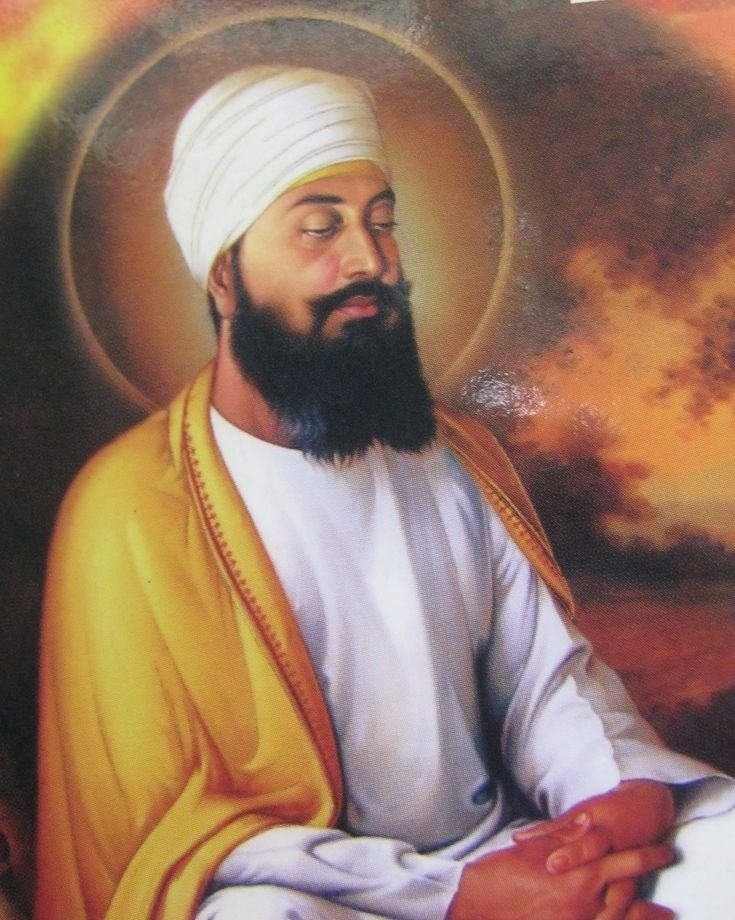
Guru Tegh Bahadur Ji Volunteers for Sacrifice
The idea that one man’s sacrifice could save an entire community was revolutionary. But Guru Tegh Bahadur Ji knew that standing against oppression was his spiritual duty.
Preparation for the Ultimate Sacrifice
Before leaving for Delhi, Guru Ji performed several key actions:
Appointed his son Guru Gobind Singh Ji as the 10th Guru
Blessed the Sangat
Accepted martyrdom with dignity and peace
His journey to Delhi was not an act of defeat, but an act of fearless defiance.
Arrest and Imprisonment in Delhi
Guru Tegh Bahadur Ji was arrested near Agra and transported to Delhi. He was imprisoned in Chandni Chowk and later kept in the Red Fort (Rang Mahal).
Torture of His Three Devoted Sikhs
To break Guru Ji’s spirit, his companions were tortured in horrifying ways:
Bhai Mati Das Ji was sawed alive
Bhai Sati Das Ji was wrapped in cotton and set on fire
Bhai Dayala Ji was boiled alive
But none of them gave up their faith or broke under pressure. Their sacrifice added to the spiritual strength of the Guru.
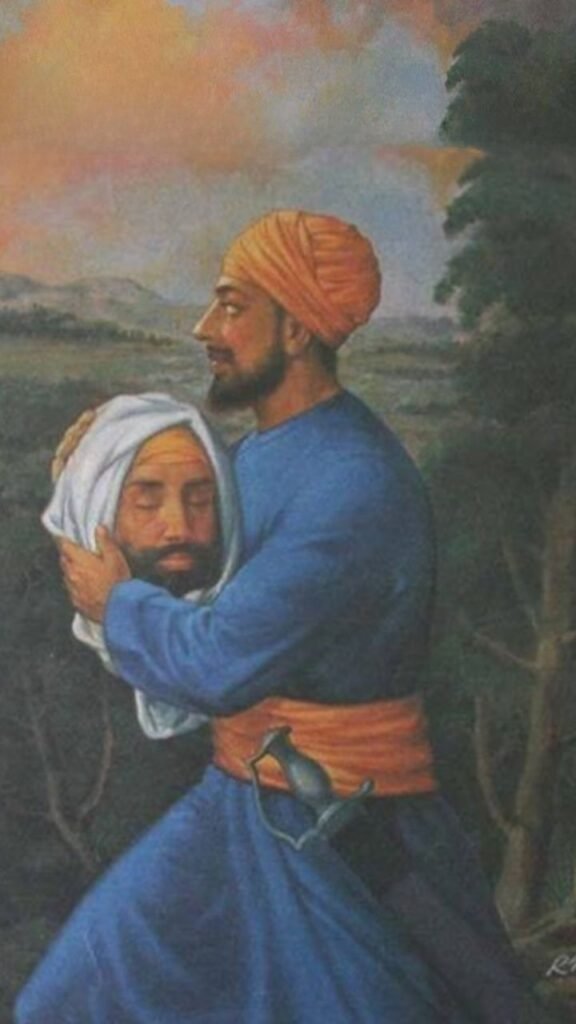
The Martyrdom Day — 24 November 1675
Finally, on the 24th of November, Guru Tegh Bahadur Ji was asked to convert or face execution. He chose truth over life.
Guru Ji’s Final Moments
Guru Ji recited Japji Sahib as he was taken to the execution site at Chandni Chowk. With unwavering courage, he accepted martyrdom.
His head was severed by executioner Jalal-ud-din, and the skies of Delhi seemed to tremble with the magnitude of his sacrifice.
His body was taken by Lakhi Shah Banjara, who cremated it secretly by burning down his own house (now Gurdwara Rakab Ganj Sahib).
His severed head was carried to Anandpur Sahib by Bhai Jaita Ji (later Bhai Jivan Singh), where it was respectfully cremated.
The Legacy of Hind Di Chadar
Guru Tegh Bahadur Ji’s sacrifice was not for Sikhs alone. It was for:
Freedom of religion
Human rights
The protection of the oppressed
Universal justice
A Martyrdom That Changed India Forever
His martyrdom inspired:
The formation of the Khalsa by Guru Gobind Singh Ji
The rise of Sikh warriors against tyranny
A new chapter in India’s struggle for dignity and faith
Today, Gurdwara Sheesh Ganj Sahib in Delhi stands where he was martyred — a reminder that freedom often comes at the highest price.
Key Dates Related to Guru Tegh Bahadur Ji
Important Historical Dates
1 April 1621: Birth of Guru Tegh Bahadur Ji
1665: Became the Ninth Guru
4 May 1675: Kashmiri Pandits approached Guru Ji
8 July 1675: Guru Ji arrested
24 November 1675: Martyrdom Day
December 1675: Cremation in Anandpur Sahib
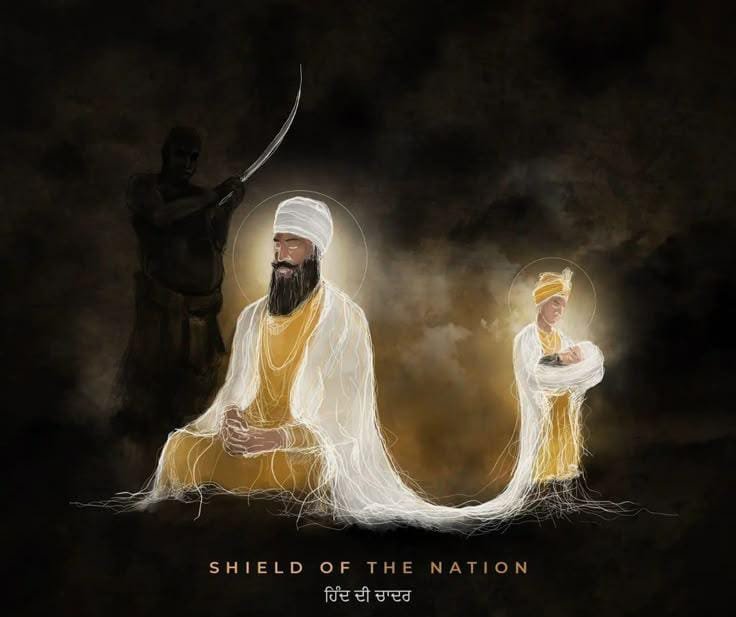
Conclusion — The Eternal Message of Courage
Guru Tegh Bahadur Ji’s martyrdom is not just a historical event; it is a timeless lesson. He proved that one person’s courage can protect the rights of thousands.
His legacy continues to guide the world towards fearlessness, justice, and equality.





Join the discussion 2 Comments