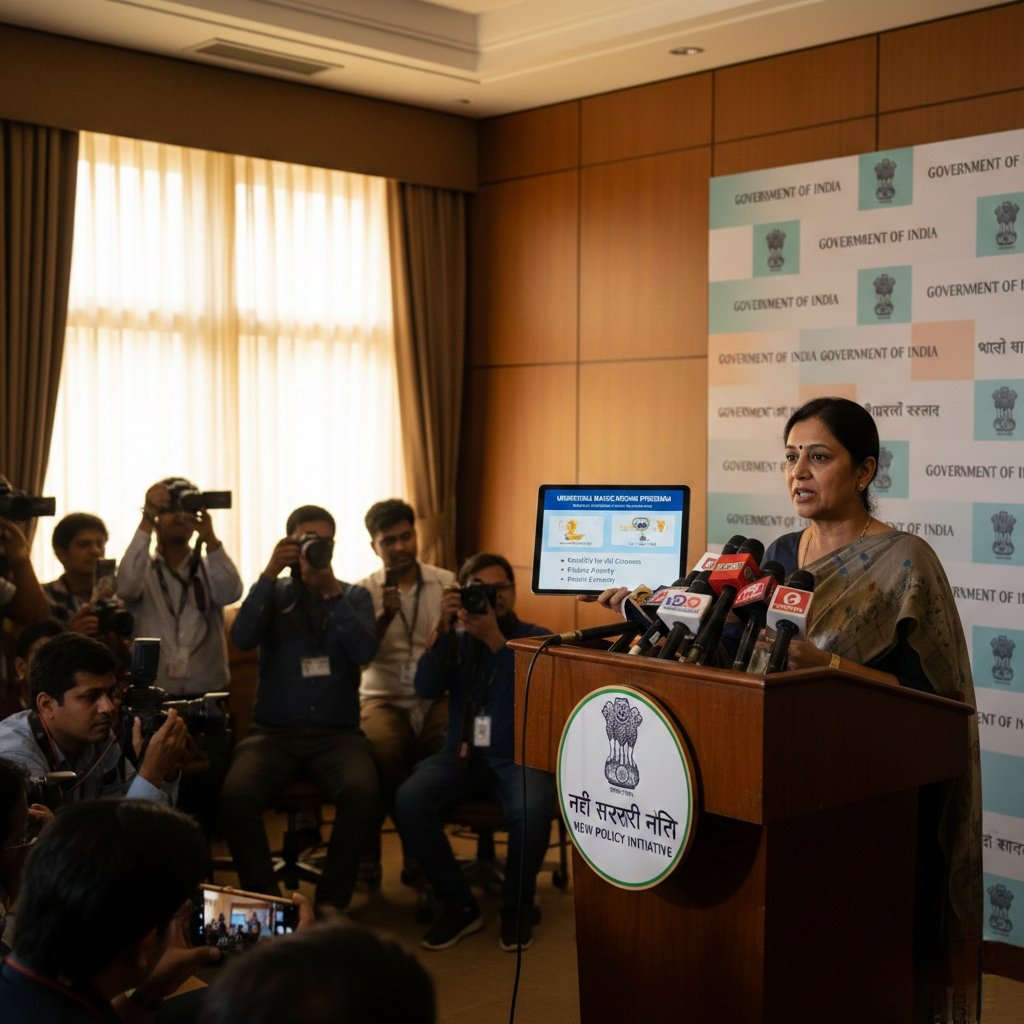
The government’s newly introduced Sachar Smitha Scheme has instantly become the most talked-about policy of the year. While officials claim it is designed to “empower citizens through data-based welfare,” critics argue it is nothing short of a massive surveillance gateway, cloaked in progressive language. The program’s promise of “personalized public services” sounds futuristic, but the way it quietly accesses personal information has ignited a nationwide privacy debate.
In this article, we break down why the Sachar Smitha Scheme is causing controversy, suspicion, and widespread public pushback, and how its data-driven design may transform — or threaten — the idea of digital citizenship.

What Is the Sachar Smitha Scheme?
The Sachar Smitha Scheme is officially described as a data-integration welfare platform that uses citizens’ demographic, financial, educational, and behavioral data to “optimize service delivery.” On paper, it promises:
Faster approvals
Automated benefit analysis
Personalized welfare recommendations
A unified digital identity layer
However, many are calling it “Aadhaar 2.0 with extra steps”, arguing that its real intention seems to be tracking rather than helping.
https://salmon-hawk-329520.hostingersite.com/imran-khan-death-news-suspense/
How the Scheme Became a Privacy Flashpoint
The Core Concern: Too Much Data, Too Centralized
A key controversy stems from the massive data pool the scheme plans to merge. Sources suggest the platform will connect:
Tax records
Aadhaar data
Health profiles
Education databases
Social media patterns
Employment records
Banking activity
Such an extensive integration has sparked anxiety that the government will gain unprecedented access to digital behavior, raising fears of profiling, monitoring, and predictive surveillance.
Why Privacy Advocates Are Alarmed
- Unclear Data Boundaries
The policy documents — at least the portions released publicly — fail to clearly explain:
What exact data categories will be collected
Who controls the data
How long data will be stored
Whether users can opt out
This lack of transparency fuels suspicion that the Sachar Smitha Scheme is designed to accumulate as much data as possible with minimal public oversight.
- Algorithmic Decision-Making
The scheme’s “AI-powered eligibility engine” has drawn intense criticism. Experts warn it may:
Penalize citizens based on financial behavior
Reject benefits due to “risk profiles”
Predict future income inaccurately
Create invisible digital discrimination
The fear of being judged by an algorithm — with no human explanation — has amplified the scheme’s controversy.
- Potential for Misuse
Digital rights activists claim that without strong checks and balances, centralized databases can:
Be exploited for political profiling
Enable mass surveillance
Be sold or leaked to private companies
Influence voting behavior
In a country where data breaches are already frequent, handing over even more information feels dangerous.
https://www.digitalprivacyforum.org/reports/data-governance-issues
Is the Scheme a Welfare Revolution or a Silent Surveillance Model?
Government Claims: “Efficiency and Inclusion”
Officials argue that the scheme represents a high-tech social innovation. According to them, Sachar Smitha will:
Reduce bureaucratic delays
Stop duplication of beneficiaries
Cut welfare corruption
Ensure targeted delivery to the needy
Supporters call it the “future of digital governance.”
Yet, critics ask: At what cost?

Opposition Response: “This Is Data Colonialism”
Leaders across political lines have raised concerns that the scheme gives the state more power than the Constitution ever intended. Their key objections include:
No parliamentary debate on the data framework
Lack of independent audits
Ambiguous legal safeguards
Excessive executive authority
Some compare the scheme to “digital tracking mechanisms” used in other countries, warning it could become a tool to silence dissent.
Major Controversies Surrounding the Sachar Smitha Scheme
- The Consent Controversy
One of the largest debates surrounds the idea of “implicit consent” written into the scheme. This means:
If a citizen accesses any welfare service, it is assumed they consent to all data integrations.
Legal experts argue this violates the fundamental principle of informed consent, making the scheme ethically questionable.
- No Clarity on Third-Party Access
Privacy watchdogs claim that several private tech contractors may be involved in the data processing. The fear is:
Private corporations gaining access to intimate citizen details
Monetization of behavioral data
Targeted advertising based on state-collected information
This mixes welfare with commercial exploitation — a dangerous combination.
- Behavioral Scoring System
Rumors circulating online (unconfirmed but widely discussed) suggest the scheme will classify citizens based on:
Spending patterns
Social behavior
Online activities
“Financial responsibility metrics”
This has been compared to social credit systems, sparking heated debate.
What Could Go Wrong with Such a Scheme?
Loss of Digital Autonomy
When every action becomes a data point, citizens lose control over:
How they appear to the state
How decisions are made about them
Their digital “identity reputation”
This could redefine the power balance between government and people.
Data Breaches Become National Disasters
A breach in such a centralized database would not simply leak phone numbers — it could expose:
Health histories
Bank linked records
Location logs
Personal communications
Family details
The consequences would be irreversible.
Potential for Targeted Surveillance
Once data is centralized, it can be used to:
Track protestors
Identify political critics
Suppress activism
Influence democratic processes
Even if the current administration refrains from misuse, there is no guarantee about future governments.
Public Outrage and the Growing Digital Resistance
Citizens Are Demanding Answers
Within days of the scheme’s announcement, hashtags questioning its motives trended across social media. People demand:
Full transparency
Clear data policies
Right to opt out
Independent digital oversight
The movement is becoming a wider call for data independence, not just privacy.

Conclusion: The Sachar Smitha Scheme Could Redefine India’s Digital Future — For Better or Worse
The Sachar Smitha Scheme stands at the intersection of innovation and intrusion. While it promises modernized welfare delivery, its design raises severe privacy questions that cannot be ignored.
If implemented without robust safeguards, it risks becoming the most controversial data-collection project in the country’s history. Citizens, experts, and policymakers now face a crucial question:
Should convenience come at the cost of privacy?