
Introduction: The Dark Side of Ethanol Development
Ethanol factories are often promoted as symbols of progress, sustainability, and energy independence. Governments and corporations label them as eco-friendly alternatives to fossil fuels. But on the ground, especially near agricultural regions, a very different reality is emerging.
Behind the slogans of “clean energy” and “biofuel revolution” lies a serious threat to surrounding land, water, soil, and farming livelihoods. In many rural areas, ethanol factories have become flashpoints of controversy, resistance, and fear. This article explores why ethanol factories can be dangerous for surrounding land and why farmers increasingly see them as a long-term disaster rather than development.
The Ethanol Factory Model: What Really Happens on the Ground
Large Industry in Small Rural Spaces
Most ethanol factories are built near villages because they require:
Large land parcels
Continuous water supply
Proximity to agricultural raw materials
While this seems efficient on paper, it places heavy industrial pressure on fragile rural ecosystems that were never designed to handle such load.http://www.ethanol.com
Water: The First and Biggest Victim
Ethanol Production Is Extremely Water-Intensive
Ethanol factories consume millions of litres of water daily for:
Grain washing
Fermentation
Cooling systems
Waste processing
Why This Is Dangerous for Surrounding Land
Groundwater levels drop rapidly
Nearby wells and tube wells dry up
Canal water meant for irrigation is diverted
Soil moisture declines year after year
In water-scarce regions, this creates a silent agricultural emergency
Industrial Water Use vs Farmer Survival
One factory can use more water in a day than several villages use in a week. When industry drinks first and farmers wait later, agriculture slowly dies.
This imbalance turns ethanol factories into water predators in farming landscapes.
Soil Pollution: Poisoning the Foundation of Farming
Industrial Waste and Chemical Residue
Ethanol factories generate:
Liquid effluents
Chemical by-products
Sludge waste
Even with treatment plants, leakage, overflow, and improper disposal are common risks.
Impact on Surrounding Land
Soil contamination reduces fertility
Microorganisms essential for crops die
Crop yields fall gradually
Land becomes dependent on chemical inputs
Once soil is damaged, recovery can take decades.
From Fertile Fields to Dead Zones
Farmers often notice:
Reduced crop quality
Unusual plant diseases
Decline in earthworms and insects
These are early warning signs of industrial soil poisoning, but by the time damage is officially acknowledged, it is usually irreversible.
Air Pollution: The Invisible Threat
Ethanol Factories Are Not Emission-Free
Despite being labeled “green,” ethanol factories emit:
Fermentation gases
Boiler smoke
Fine particulate matter
Chemical odours
Why This Matters for Land
Polluted air settles on crops
Leaves absorb toxic particles
Photosynthesis efficiency drops
Livestock health is affected
Air pollution doesn’t stay in the air — it falls back onto the land.
Monoculture Pressure and Crop Imbalance
Ethanol Push Forces Farmers into Risky Cropping
Ethanol factories encourage large-scale production of:
Maize
Sugarcane
Broken rice
This leads to:
Reduced crop diversity
Soil nutrient imbalance
Increased pest attacks
Higher dependency on fertilizers
Over time, surrounding land becomes ecologically weak and economically risky.
Land Value Rises, But Land Use Falls
The False Promise of Prosperity
Supporters argue ethanol factories increase land value. But farmers often experience:
Higher land prices
Lower agricultural usability
Pressure to sell land
Gradual loss of farming identity
The land may become expensive, but it becomes less alive, less productive, and less independent.
Wastewater Discharge: A Slow Environmental Bomb
Treated or Not, Wastewater Changes the Land
Even treated wastewater contains:
High salt levels
Organic load
Residual chemicals
When released into:
Fields
Drains
Natural water channels
It leads to:
Salinity increase
Hardening of soil
Reduced water absorption
Crop stress
This damage is slow, silent, and permanent.
Health Impact on Farming Communities
Land Damage Equals Human Damage
When land suffers:
Food quality declines
Water becomes unsafe
Air turns toxic
Farmers report:
Skin problems
Respiratory issues
Livestock illnesses
A poisoned land creates poisoned lives, even if statistics fail to capture it.
Lack of Long-Term Accountability
Who Pays When the Land Is Destroyed?
Ethanol factories often:
Operate under temporary clearances
Change ownership
Shut down after profit cycles
But farmers remain with:
Polluted soil
Depleted water
Unusable land
There is no real compensation for environmental loss.
Development or Displacement? The Real Question
Is This Progress or Rural Sacrifice?
Ethanol factories are promoted as national interest projects, but the cost is paid locally:
By farmers
By villages
By future generations
When development destroys land, it is not progress — it is displacement without relocation.
Why Protests Are Inevitable
Farmers protest because they understand one truth:
Once land is destroyed, no policy can bring it back.
The resistance around ethanol factories is not anti-development — it is pro-survival.
Conclusion: Green Fuel, Brown Land
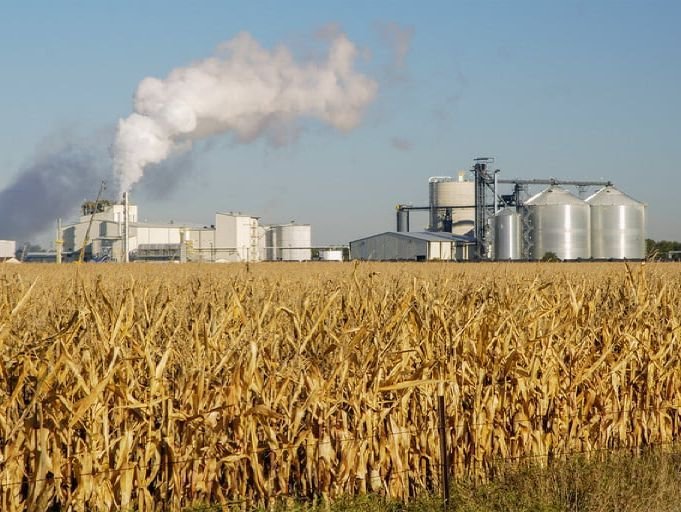
Ethanol may reduce oil imports and look good in policy documents, but on the ground, it often turns green fields into brown, stressed landscapes.
Surrounding land pays the price through:
Water depletion
Soil pollution
Air contamination
Loss of agricultural stability
If ethanol factories continue expanding without strict safeguards, transparent consent, and ecological limits, they risk becoming industrial disasters disguised as green solutions.
True sustainability cannot be built on sacrificed farmland. Development that destroys land is not clean energy — it is a slow environmental crime.