
In Greek mythology, few figures are as misunderstood and unfairly feared as Hades, the god of the Underworld. Often confused with the concept of evil or wrongly equated with the devil, Hades was not a symbol of wickedness but a powerful, lawful, and essential deity who ruled over the realm of the dead. Unlike other Olympian gods who thrived on Mount Olympus, Hades governed a darker yet necessary domain that ensured balance between life and death. His story is one of authority, responsibility, and inevitability rather than cruelty.
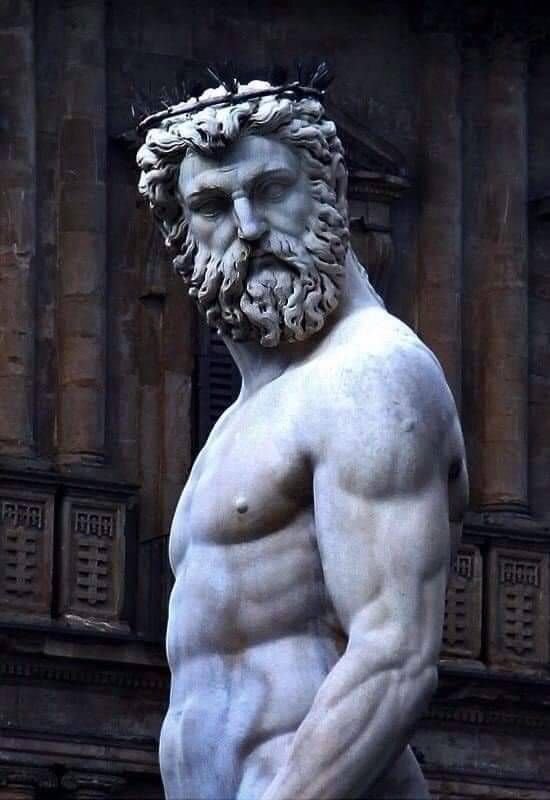
Who Is Hades in Greek Mythology?
Hades is one of the three major sons of the Titans Cronus and Rhea, alongside Zeus and Poseidon. After the Olympians defeated the Titans in the Titanomachy, the three brothers divided the universe by drawing lots
Zeus received the sky
Poseidon ruled the sea
Hades became the ruler of the Underworld
Though Hades ruled one of the most feared realms, he was an Olympian god by status, even if he rarely resided on Mount Olympus. His authority was absolute within his domain, and even the other gods respected the laws of death he enforced
The Underworld – Realm of Hades
Structure of the Underworld
The Underworld was not simply a place of punishment. It was a complex realm divided into several regions:
Asphodel Meadows – where ordinary souls wandered
Elysian Fields – reserved for heroes and virtuous souls
Tartarus – a deep abyss for punishment of the wicked and enemies of the gods
Hades presided over all these realms as a fair and unyielding ruler. He did not judge souls himself; that duty belonged to judges like Minos, Rhadamanthus, and Aeacus.
The Role of Hades as a Lawful God
Hades was deeply committed to cosmic order. Once a soul entered his domain, it was not allowed to return to the living world without divine permission. This strict enforcement is why Hades was feared, not because he was cruel, but because death is permanent.
He rarely interfered in human affairs, making him one of the least meddling gods in Greek mythology.
Symbols and Attributes of Hades
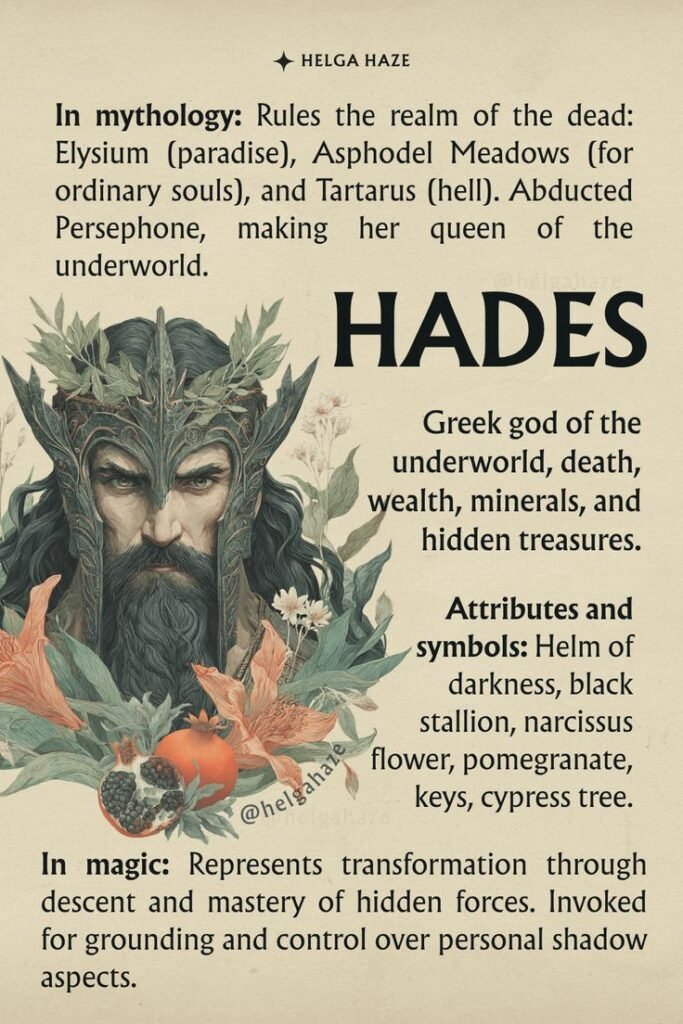
Hades is often depicted with powerful symbols that represent his authority:
Helm of Darkness – granted invisibility
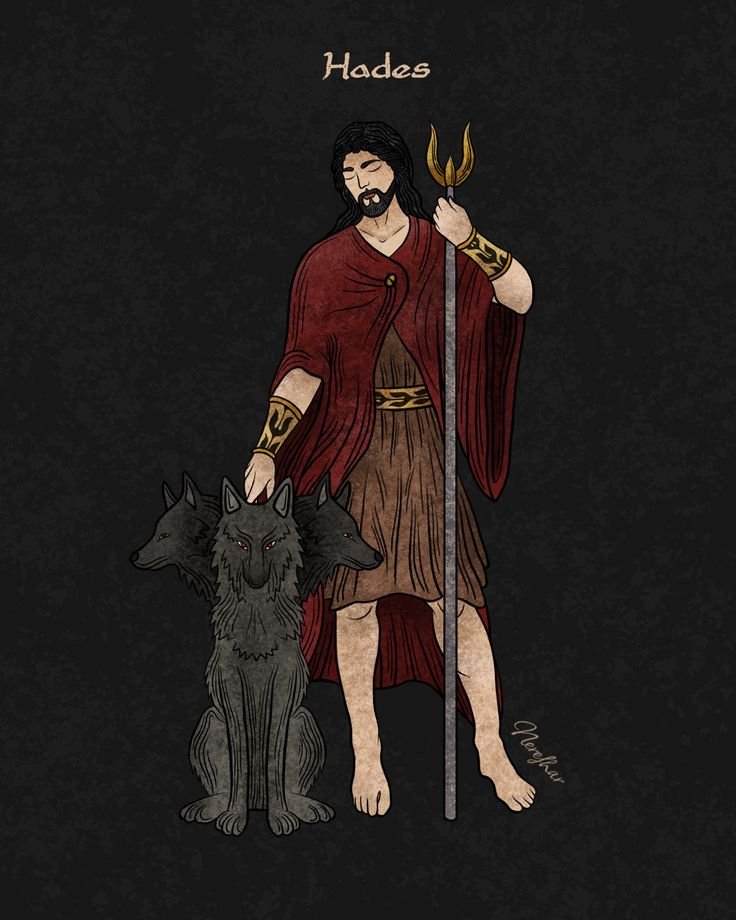
Bident – a two-pronged weapon symbolizing control
Cerberus – the three-headed dog guarding the Underworld
Cypress trees – associated with mourning and death
These symbols reinforced his role as a guardian rather than a destroyer.
Hades and Wealth – The God of Riches Why Hades Is Also Called Plouton
One lesser-known aspect of Hades is his association with wealth. He was often called Plouton (Pluto), meaning “the giver of riches.” This title refers to the precious metals, gems, and fertile soil found beneath the earth.
Ancient Greeks believed all underground wealth belonged to Hades. Farmers even prayed to him for fertile harvests, recognizing that life depends on the soil—another realm under his control.
The Myth of Hades and Persephone
The Abduction of Persephone
The most famous myth involving Hades is his relationship with Persephone, daughter of Demeter. According to myth, Hades abducted Persephone with Zeus’s consent and made her queen of the Underworld.
This act caused immense grief to Demeter, the goddess of agriculture, leading to famine on Earth.
The Cycle of Seasons
A compromise was reached: Persephone would spend part of the year in the Underworld with Hades and the rest on Earth with her mother. This myth explains the changing seasons:
Persephone in the Underworld → Autumn and Winter
Persephone on Earth → Spring and Summer
Contrary to modern portrayals, some versions of the myth show Persephone eventually becoming a powerful and respected queen, ruling alongside Hades rather than as a victim.
Personality and Character of Hades
Not Evil, but Stern
Hades was not evil or malicious. Compared to gods like Zeus or Poseidon, who often acted impulsively, Hades was reserved, disciplined, and just.
Key traits of Hades include:
Loyalty
Responsibility
Emotional restraint
Respect for rules
He punished only those who defied divine law, such as Sisyphus and Tantalus.
Worship and Fear of Hades
Why Temples Were Rare
Unlike other gods, Hades was rarely worshipped openly. Ancient Greeks feared invoking his name and often used euphemisms like “the Kindly One.”
Sacrifices to Hades were performed at night, and offerings were placed directly into the ground, symbolizing his underground realm.
Hades in Greek Epics and Literature
Hades appears in major Greek works such as:
Homer’s Iliad and Odyssey
Hesiod’s Theogony
Orphic Hymns
In these texts, Hades is portrayed as a serious and authoritative ruler, never chaotic or unjust. Even heroes like Heracles and Orpheus needed permission to enter his realm.
Hades vs Modern Misinterpretations
Confusion with the Devil
Modern culture often falsely compares Hades to Satan. This comparison is inaccurate. Hades does not tempt souls, punish the innocent, or oppose divine order. He maintains balance, ensuring that life and death remain separate.
Greek mythology has no concept equivalent to the Christian hell ruled by a devil.
Legacy of Hades in Popular Culture
Hades continues to influence modern storytelling through:
Literature
Films
Video games
Philosophy
However, many portrayals exaggerate his cruelty, ignoring his original mythological role as a neutral force of order.
Conclusion – The True Meaning of Hades
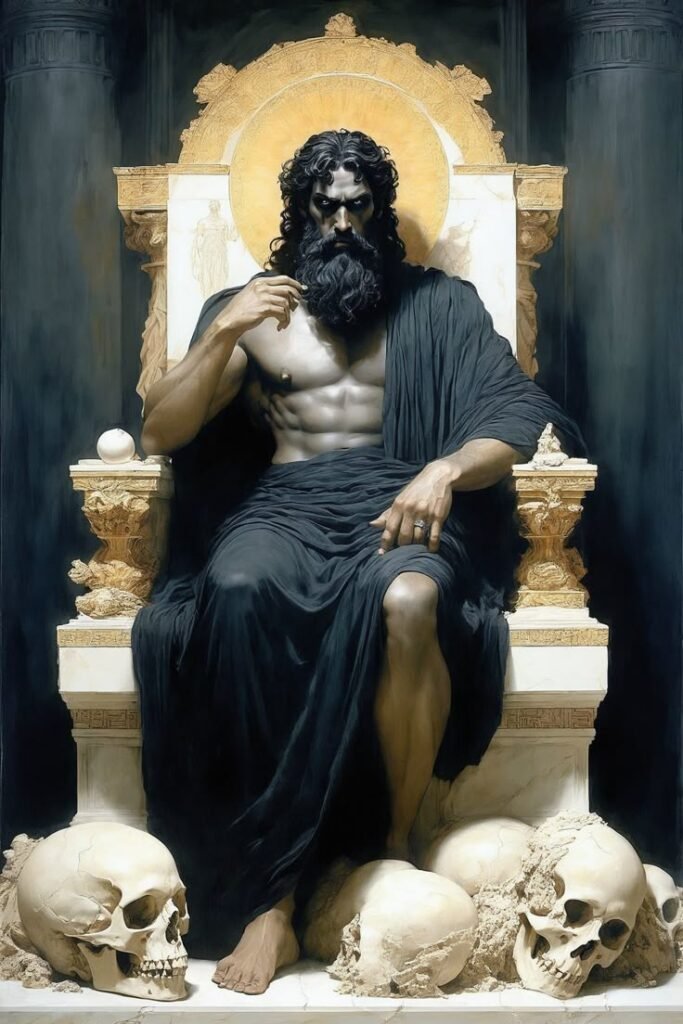
Hades represents one of the most important truths in Greek mythology: death is not evil, it is inevitable. As the ruler of the Underworld, Hades ensured that the universe functioned according to divine law. He was not a tyrant, but a necessary guardian of balance.
Understanding Hades through authentic mythology reveals a god of duty, justice, and quiet authority. Far from being a villain, Hades stands as one of the most disciplined and misunderstood figures in ancient Greek belief.
By separating myth from misconception, Hades emerges not as a god to fear, but as one to respect.