
Guru Nanak Dev Ji was the founder of Sikhism and one of the greatest spiritual teachers the world has ever known. Born in the fifteenth century, a time marked by deep religious divisions, social injustice, and political turmoil, Guru Nanak Dev Ji emerged as a beacon of truth, compassion, and unity. His teachings transcended religious boundaries and laid the foundation for a spiritual path based on truth (Satya), equality, selfless service, and devotion to one universal God. Even after more than five centuries, his message continues to guide humanity toward peace and harmony.
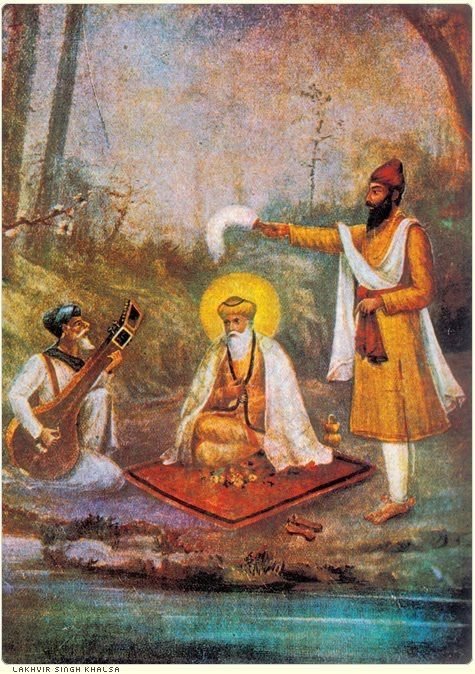
Birth and Early Life of Guru Nanak Dev Ji
Guru Nanak Dev Ji was born on 15 April 1469 in Rai Bhoi di Talwandi, now known as Nankana Sahib in present-day Pakistan. His father, Mehta Kalu, was a village accountant, and his mother, Mata Tripta, was a deeply spiritual woman. From an early age, Guru Nanak displayed extraordinary wisdom, compassion, and a questioning mind. He showed little interest in material wealth or ritualistic practices and instead focused on understanding the deeper meaning of life and God.http://www.truthfrontier.com
Stories from his childhood describe how he challenged blind customs and emphasized inner purity over external rituals. These early signs revealed that Guru Nanak Dev Ji was destined for a higher spiritual mission.http://www.sgpc.com
The Divine Revelation and Spiritual Awakening
At the age of around 30, Guru Nanak Dev Ji experienced a profound spiritual revelation while bathing in the River Bein near Sultanpur Lodhi. After disappearing for three days, he emerged with a powerful message:
“Na koi Hindu, na koi Musalman” — There is no Hindu, there is no Muslim.
This statement did not deny religious identities but emphasized that humanity is one, and that God is beyond man-made divisions. From that moment, Guru Nanak dedicated his life to spreading the message of Ik Onkar, the one formless, eternal God.
Udasis: Guru Nanak Dev Ji’s Global Journeys
To spread his teachings, Guru Nanak Dev Ji undertook extensive missionary journeys known as Udasis. These journeys took him across India, Sri Lanka, Tibet, Mecca, Baghdad, and parts of Central Asia. During these travels, he engaged in spiritual dialogues with saints, yogis, scholars, kings, and common people.
Through songs, conversations, and lived example, he challenged superstition, caste discrimination, religious hypocrisy, and social injustice. His message was simple yet revolutionary: remember God, live honestly, and serve others selflessly.
Core Teachings and Philosophy of Guru Nanak Dev Ji
The teachings of Guru Nanak Dev Ji form the spiritual foundation of Sikhism. His philosophy is practical, inclusive, and deeply humanistic.
Ik Onkar – One Universal God
Guru Nanak taught belief in one formless, eternal God who is present everywhere and within everyone. God is beyond fear, hatred, and time.
Equality of All Human Beings
He firmly rejected the caste system, gender inequality, and social hierarchies. According to him, all humans are equal before God.
Naam Japna, Kirat Karni, Vand Chakna
He emphasized three pillars of life:
Naam Japna – Remembering God
Kirat Karni – Earning honestly
Vand Chakna – Sharing with others
Guru Nanak Dev Ji and Social Reforms
Guru Nanak Dev Ji was not only a spiritual leader but also a social reformer. He strongly opposed practices such as untouchability, meaningless rituals, and exploitation in the name of religion. He uplifted the status of women by clearly stating that women are not inferior, but creators of life.
His teachings encouraged people to live a balanced life as householders, rejecting both extreme asceticism and material obsession.
Guru Nanak Dev Ji’s Contribution to Sikh Scripture
The hymns of Guru Nanak Dev Ji form a significant portion of the Guru Granth Sahib, the holy scripture of Sikhism. His compositions are written in various languages and musical measures, making them accessible to people from different backgrounds.
These hymns focus on devotion, humility, love for God, and ethical living. The poetic depth and spiritual clarity of his writings continue to inspire millions across the world.
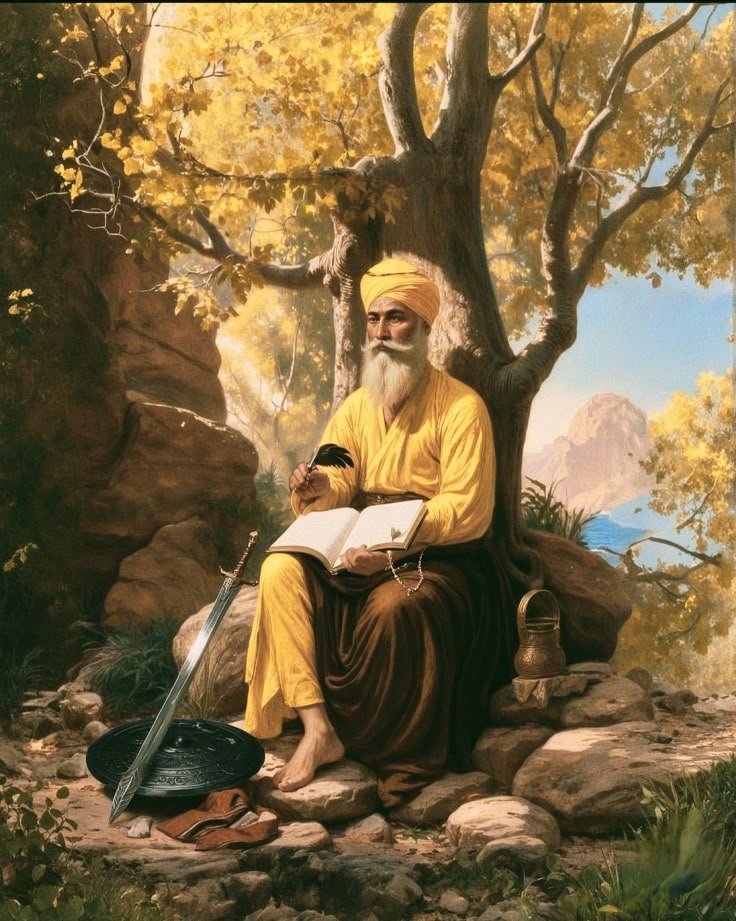
Establishment of Kartarpur and Langar System
In the later years of his life, Guru Nanak Dev Ji settled in Kartarpur, where he established a community based on equality and shared responsibility. Here, the tradition of Langar—a free community kitchen—was practiced, where people of all castes and religions sat together and ate the same food.
This system symbolized social equality, brotherhood, and selfless service, values that remain central to Sikh identity today.
Guru Nanak Dev Ji’s Passing and Spiritual Legacy
Guru Nanak Dev Ji left his physical body in 1539 at Kartarpur. Before his passing, he appointed Guru Angad Dev Ji as his successor, ensuring the continuity of Sikh teachings.
Legends say that when his followers went to perform last rites, flowers placed by both Hindus and Muslims were found fresh, symbolizing unity beyond religious divisions.
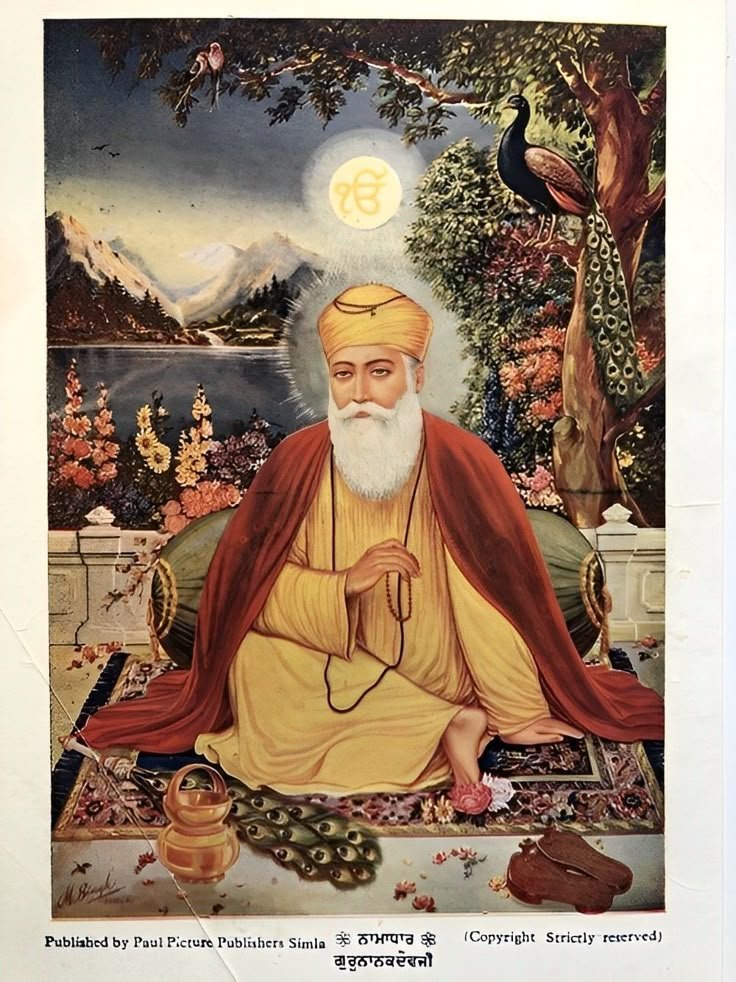
Global Relevance of Guru Nanak Dev Ji Today
In today’s world of conflict, inequality, and intolerance, the teachings of Guru Nanak Dev Ji are more relevant than ever. His emphasis on peace, interfaith harmony, truthful living, and compassion offers solutions to many modern challenges.
His message inspires not only Sikhs but people of all faiths to live ethically, respect diversity, and serve humanity.
Conclusion: The Timeless Light of Guru Nanak Dev Ji
Guru Nanak Dev Ji was not confined to a single religion or era. He was a universal teacher whose life and message belong to all humanity. By preaching unity, equality, and devotion to truth, he laid the foundation for a just and compassionate society.
His teachings remind us that true spirituality lies not in rituals or labels, but in living truthfully, loving selflessly, and seeing the divine in all. The light of Guru Nanak Dev Ji continues to guide the world toward peace and moral awakening.