
Introduction to Guru Amar Das Ji – The Third Sikh Guru
Guru Amar Das Ji was the third Guru of Sikhism, a towering spiritual reformer who transformed Sikh society through equality, discipline, and organized community life. Born on 5 May 1479 in Basarke village near Amritsar (Punjab), Guru Amar Das Ji became Guru at the age of 73, proving that spiritual awakening is not limited by age. His life stands as a powerful example of humility, devotion, and social reform grounded in divine truth.

Early Life and Family Background
Guru Amar Das Ji was born into a Bhalla Khatri family to Tej Bhan Bhalla and Lachmi Devi. In his early years, he followed traditional Hindu practices, including pilgrimages to Haridwar. Despite being religious, he felt spiritually unfulfilled. He married Mansa Devi and had four children, including Bibi Bhani, who later married Bhai Jetha Ji (Guru Ram Das Ji).http://www.sgpc.com
This ordinary family life later became the foundation of extraordinary spiritual service.http://www.truthfrontier.com
Meeting Guru Angad Dev Ji – The Turning Point
The defining moment of Guru Amar Das Ji’s life came when he met Guru Angad Dev Ji, the second Sikh Guru. Through his daughter-in-law Bibi Amro, he heard Shabads of Guru Nanak Dev Ji, which deeply moved him. At the age of 61, he became a devoted disciple of Guru Angad Dev Ji.
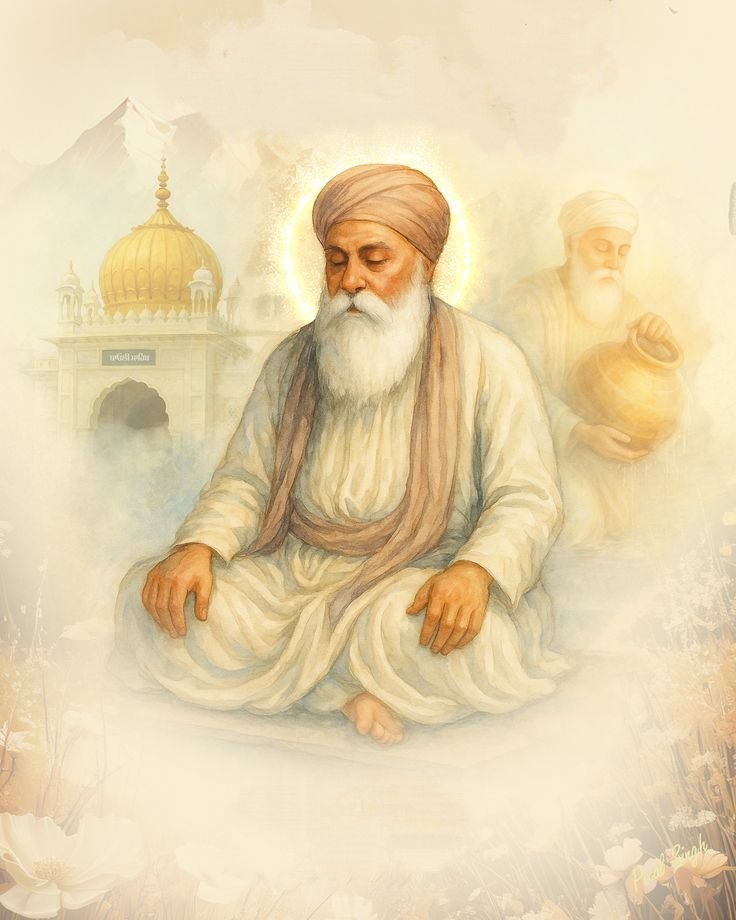
Guru Amar Das Ji served his Guru with unmatched humility, including fetching water daily from the Beas River regardless of weather or age. His selfless service (Seva) impressed Guru Angad Dev Ji, who later appointed him as the third Sikh Guru in 1552.
Guruship and Spiritual Authority
Guru Amar Das Ji assumed Guruship in 1552 and led the Sikh Panth for 22 years until 1574. His leadership focused on strengthening Sikh identity, expanding community organization, and enforcing equality in daily religious practice.
He established Goindwal Sahib as the central Sikh place of worship, which became a hub of spiritual learning and social reform.
Langar System and Equality Before God
One of Guru Amar Das Ji’s most revolutionary contributions was enforcing the principle:
“Pehle Pangat, Phir Sangat”
(First sit together in Langar, then meet the Guru)
This rule meant everyone—kings, queens, rich, poor, upper caste, lower caste—had to eat together before meeting the Guru. Even Mughal Emperor Akbar followed this rule.
This practice destroyed caste barriers and promoted absolute equality, making Langar a living symbol of Sikh values.
Champion of Women’s Rights
Guru Amar Das Ji was far ahead of his time in advocating women’s dignity and empowerment. He strongly opposed:
Sati (burning of widows)
Purdah (veil system)
Gender discrimination
He encouraged widow remarriage and appointed women as preachers and leaders within the Sikh community. His teachings declared that women are not inferior but essential to creation and spirituality.
Anand Sahib and Sikh Literature
Guru Amar Das Ji composed Anand Sahib, one of the most important Sikh hymns. It is recited during:
Sikh weddings
Birth ceremonies
Religious celebrations
Daily Nitnem (prayer)
Anand Sahib emphasizes spiritual bliss, inner peace, and union with God. His writings are preserved in the Guru Granth Sahib, ensuring his spiritual message remains eternal.
Manji System – Organized Sikh Administration
To manage the growing Sikh population, Guru Amar Das Ji introduced the Manji System, dividing Sikh regions into 22 Manjis (dioceses). Each Manji was led by a trained Sikh preacher, many of whom were women.
This administrative structure strengthened discipline, unity, and outreach, transforming Sikhism from a spiritual movement into an organized faith.
Relationship with Mughal Emperor Akbar
Guru Amar Das Ji maintained a respectful yet firm relationship with Emperor Akbar. Akbar visited Goindwal Sahib and humbly sat in Langar like everyone else. Deeply impressed, Akbar offered land grants, which the Guru politely refused, emphasizing that spiritual institutions must remain independent of political power.
This interaction highlighted Sikh values of humility, independence, and moral authority.
Baoli Sahib – Sacred Well of Goindwal
Guru Amar Das Ji oversaw the construction of the Baoli Sahib, a stepped well with 84 steps at Goindwal Sahib. Pilgrims believe that reciting Japji Sahib at each step leads to spiritual liberation.
Baoli Sahib symbolized both physical service and spiritual progress, merging practical needs with divine devotion.
Nomination of Guru Ram Das Ji
Before leaving the physical world, Guru Amar Das Ji appointed Guru Ram Das Ji (his son-in-law Bhai Jetha) as the fourth Sikh Guru in 1574. This decision reaffirmed the Sikh principle that spiritual merit, not bloodline, determines leadership.
Jyoti Jot – Completion of Earthly Journey
Guru Amar Das Ji merged with the divine light (Jyoti Jot) on 1 September 1574 at Goindwal Sahib at the age of 95. His long life was devoted entirely to service, reform, and spiritual upliftment.
Legacy of Guru Amar Das Ji
The legacy of Guru Amar Das Ji remains deeply embedded in Sikh life:
Langar as a global symbol of equality
Women’s empowerment in religion
Organized Sikh administration
Anand Sahib as a spiritual treasure
Rejection of caste, ritualism, and superstition
His teachings continue to guide millions toward humility, discipline, and devotion to One God.
Conclusion – A Guru Who Reshaped Sikh Society
Guru Amar Das Ji was not only a spiritual teacher but a social revolutionary. Through courage, compassion, and divine wisdom, he reshaped Sikh society into a community rooted in equality, service, and truth. His life proves that true leadership is born from humility and sustained through service.
Guru Amar Das Ji’s message remains timeless—serve humanity, remember the One, and live with dignity.