
Introduction to Guru Arjan Dev Ji
Guru Arjan Dev Ji, the fifth Guru of Sikhism, holds a central and revered position in Sikh history. Born on 15 April 1563 in Goindval, Punjab, he was the youngest son of Guru Ram Das Ji, the fourth Sikh Guru, and Mata Bhani Ji. Guru Arjan Dev Ji became Guru at the young age of 18 in 1581 and served the Sikh Panth until his martyrdom in 1606. His life was marked by deep spirituality, organizational wisdom, and supreme sacrifice, shaping Sikhism into a strong, distinct, and resilient faith.

Early Life and Spiritual Upbringing
From childhood, Guru Arjan Dev Ji was immersed in the spiritual environment of the Sikh Gurus. He received guidance not only from his father Guru Ram Das Ji but also from his maternal grandfather Guru Amar Das Ji, the third Sikh Guru. This unique http://www.sgpc.comupbringing nurtured his humility, devotion, poetic brilliance, and understanding of Gurbani. Unlike worldly ambitions, Guru Arjan Dev Ji showed early inclination toward meditation, service, and divine remembrance.http://www.truthfrontier.com
Ascension to Guruship
Guru Arjan Dev Ji formally assumed the Guruship in 1581. His appointment was divinely ordained and recognized by the Sikh Sangat. However, his succession was opposed by his elder brother Prithi Chand, who created internal challenges. Despite this, Guru Arjan Dev Ji responded with patience, forgiveness, and compassion, setting an enduring example of Sikh values rooted in humility and trust in Waheguru.
Compilation of the Adi Granth
One of the greatest contributions of Guru Arjan Dev Ji was the compilation of the Adi Granth, the sacred scripture of Sikhism, later known as Guru Granth Sahib. Before its compilation, hymns of Sikh Gurus were preserved orally or scattered in handwritten collections. To protect the authenticity of Sikh teachings, Guru Arjan Dev Ji undertook the monumental task of collecting, editing, and organizing the hymns.
Significance of the Adi Granth
In 1604, the Adi Granth was completed and installed at the Harmandir Sahib (Golden Temple) in Amritsar. The scripture included hymns of the first five Sikh Gurus along with selected compositions of Hindu and Muslim saints such as Bhagat Kabir, Bhagat Namdev, Sheikh Farid, and others. This inclusion reflected Sikhism’s universal message of equality, devotion, and unity of humanity beyond caste or religion.
Contribution to Gurbani
Guru Arjan Dev Ji himself composed over 2,000 hymns, the largest contribution by any Sikh Guru. His compositions emphasize themes of divine love, humility, surrender to God’s will (Hukam), and the pain of separation from the Divine. His Gurbani is known for emotional depth, lyrical beauty, and spiritual clarity, forming the backbone of Sikh daily prayers.

Development of Harmandir Sahib
Guru Arjan Dev Ji completed the construction of Harmandir Sahib, popularly known as the Golden Temple. Designed with entrances on all four sides, it symbolized openness to people of all castes, religions, and directions. He invited Mian Mir, a Muslim Sufi saint, to lay the foundation stone, reinforcing the Sikh principle of interfaith harmony.
Strengthening Sikh Institutions
During his Guruship, Guru Arjan Dev Ji strengthened Sikh institutions such as Langar (community kitchen), Sangat (holy congregation), and Manji system for regional administration. These institutions ensured unity, social equality, and collective responsibility among Sikhs. Under his leadership, Sikhism grew rapidly across Punjab and beyond.
Relations with the Mughal Empire
Initially, Guru Arjan Dev Ji maintained peaceful relations with Mughal Emperor Akbar, who respected the Guru and even donated land for Langar. However, after Akbar’s death, Emperor Jahangir ascended the throne and viewed the growing influence of Sikhism as a political threat. Jahangir was also angered by Guru Arjan Dev Ji’s spiritual support to Prince Khusrau, who had rebelled against him.
Arrest and Martyrdom
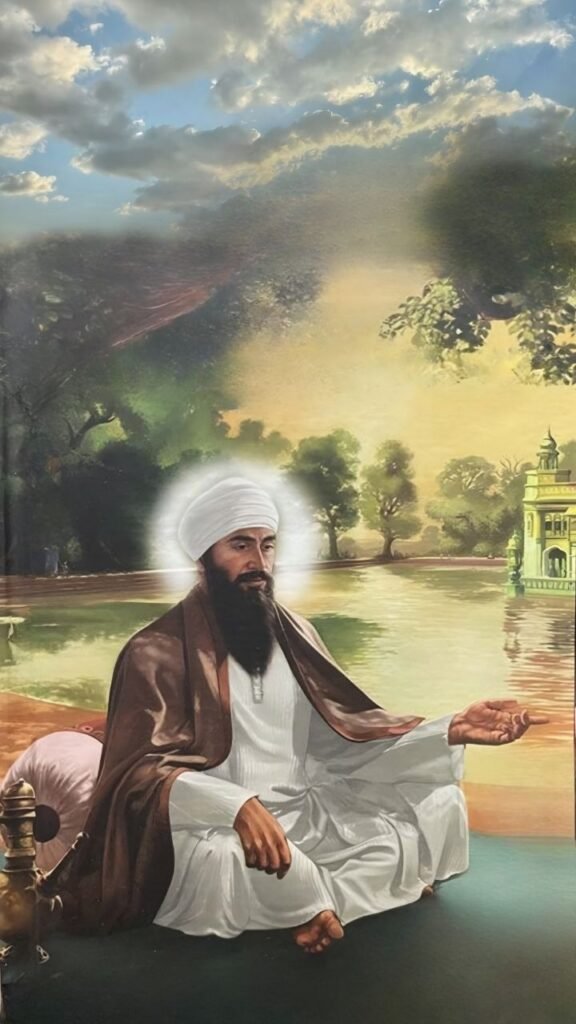
In 1606, Guru Arjan Dev Ji was arrested on Jahangir’s orders. He was fined heavily and asked to alter verses of the Adi Granth, which he firmly refused. As a result, he was subjected to severe torture in Lahore. Despite unimaginable suffering, Guru Arjan Dev Ji remained calm, meditative, and immersed in Naam Simran. He attained martyrdom on 30 May 1606, becoming the first martyr of Sikhism.
Meaning of His Martyrdom
Guru Arjan Dev Ji’s martyrdom marked a turning point in Sikh history. It demonstrated that spiritual truth stands above tyranny and injustice. His sacrifice transformed the Sikh Panth from a purely spiritual movement into a community prepared to defend righteousness. His final message to his son, Guru Hargobind Ji, laid the foundation for the concept of Miri-Piri, the balance of temporal and spiritual authority.
Legacy and Influence
The legacy of Guru Arjan Dev Ji is vast and everlasting. He gave Sikhism its eternal scripture, its central shrine, and its first example of martyrdom. His life teaches Sikhs to remain steadfast in faith, accept God’s will with grace, and stand against oppression without hatred.
Guru Arjan Dev Ji in Sikh Daily Life
Even today, Sikhs around the world recite Gurbani composed by Guru Arjan Dev Ji in daily prayers such as Sukhmani Sahib, which is revered for its calming, spiritual, and philosophical depth. His teachings continue to guide Sikhs toward humility, compassion, and devotion.

Conclusion: Eternal Light of the Fifth Guru
Guru Arjan Dev Ji was not only a compiler, poet, and builder but also a symbol of supreme sacrifice and spiritual courage. His life bridged devotion with discipline and peace with resistance to injustice. As the fifth Guru of Sikhism, he laid the unshakable foundations upon which Sikh identity, scripture, and sovereignty continue to stand. His message remains timeless—truth may be tested, but it can never be defeated.