
Guru Hargobind Sahib Ji, the sixth Guru of Sikhism, occupies a unique and powerful place in Sikh history. He transformed the Sikh community by introducing the concept of Miri-Piri, the combined authority of temporal power (Miri) and spiritual authority (Piri). His leadership marked a turning point where Sikhs learned to defend righteousness while remaining deeply rooted in spirituality. Guru Hargobind Sahib Ji was not only a saint but also a soldier, philosopher, and visionary leader who shaped Sikh identity for generations to come.

Birth and Early Life of Guru Hargobind Sahib Ji
Guru Hargobind Sahib Ji was born on 19 June 1595 in Guru Ki Wadali, near Amritsar, Punjab. He was the only son of Guru Arjan Dev Ji, the fifth Sikh Guru, and Mata Ganga Ji. From an early age, he displayed qualities of courage, intelligence, and deep spiritual awareness.http://www.sgpc.com
His upbringing combined religious education with physical training. He was trained in Gurbani, Sikh philosophy, and ethics, while also learning horsemanship, swordsmanship, archery, and wrestling. This balanced education prepared him for the dual role he would later assume as both spiritual guide and temporal leader of the Sikh community.http://www.truthfrontier.com
Ascension to Guruship
Guru Hargobind Sahib Ji became the sixth Sikh Guru in 1606, following the martyrdom of his father, Guru Arjan Dev Ji, who was executed under the orders of the Mughal emperor Jahangir. This tragic event deeply influenced Guru Hargobind Ji’s vision for Sikhism.
Understanding the need for self-defense and justice, he changed the course of Sikh leadership. During his installation ceremony, he wore two swords, symbolizing Miri (political authority) and Piri (spiritual authority). This act sent a clear message that spiritual life should not be separated from the responsibility to stand against oppression.
Concept of Miri and Piri
One of the most significant contributions of Guru Hargobind Sahib Ji was the doctrine of Miri-Piri.
Miri represents worldly power, justice, and governance.
Piri represents spiritual authority, devotion, and moral guidance.
Guru Hargobind Ji taught that a true Sikh must maintain a balance between spirituality and worldly responsibilities. This principle became a cornerstone of Sikh philosophy and later played a vital role in the formation of the Khalsa under Guru Gobind Singh Ji.
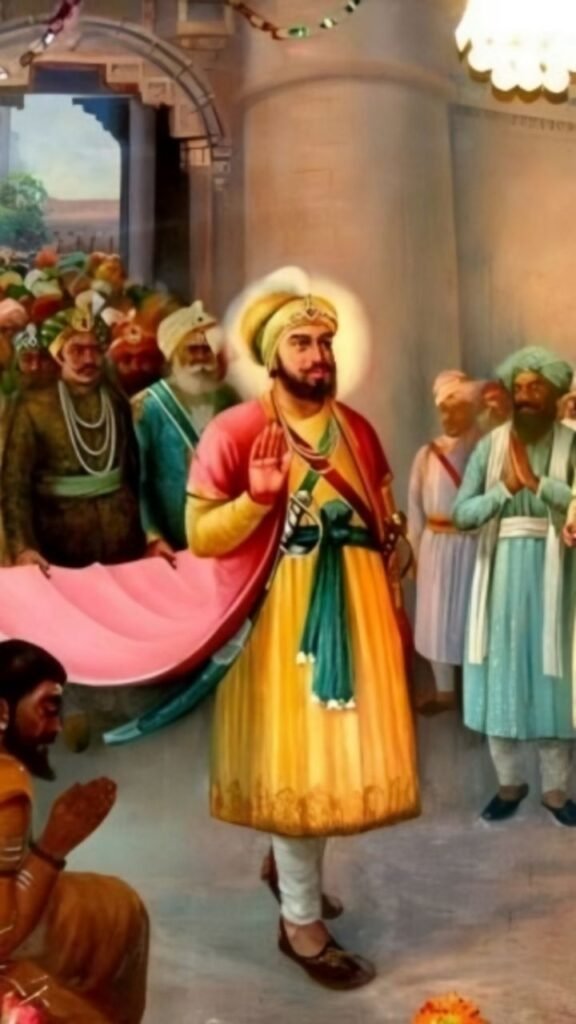
Akal Takht – Throne of the Timeless One
In 1606, Guru Hargobind Sahib Ji established the Akal Takht in Amritsar, directly opposite the Harmandir Sahib (Golden Temple). The Akal Takht became the seat of temporal authority for Sikhs.
From here, Guru Ji addressed social, political, and military matters. The Akal Takht symbolized that Sikhs were no longer passive followers but a self-respecting and sovereign community guided by justice, truth, and moral courage.
Military Organization and Sikh Army
Guru Hargobind Sahib Ji organized the Sikhs into a disciplined community capable of self-defense. He maintained a standing army, trained Sikhs in warfare, and encouraged them to carry arms for protection against injustice.
However, Guru Ji never promoted aggression. His battles were defensive in nature and aimed at protecting religious freedom and human dignity. Under his leadership, Sikhs fought several conflicts against Mughal forces and local rulers, always standing firm for righteousness.
Major Battles Fought by Guru Hargobind Sahib Ji
Some important battles associated with Guru Hargobind Sahib Ji include:
Battle of Rohilla
Battle of Amritsar
Battle of Kartarpur
Battle of Phagwara
These battles strengthened Sikh morale and proved that spiritual discipline and physical strength could coexist.
Imprisonment at Gwalior Fort
At one point, Mughal emperor Jahangir imprisoned Guru Hargobind Sahib Ji at Gwalior Fort. During his imprisonment, Guru Ji continued to inspire fellow prisoners with his spiritual wisdom.
When Jahangir decided to release him, Guru Ji refused to leave unless 52 other kings, imprisoned unjustly, were also freed. Eventually, all were released with him. This event is remembered as Bandi Chhor Divas, celebrated alongside Diwali by Sikhs worldwide.

Contribution to Sikh Spiritual Life
Despite his military role, Guru Hargobind Sahib Ji remained deeply spiritual. He encouraged the singing of Kirtan, meditation on Naam, and adherence to Guru Nanak Dev Ji’s teachings.
He emphasized humility, service, honesty, and devotion to Waheguru. His life demonstrated that spiritual enlightenment does not require withdrawal from the world but active engagement in it.
Family and Successor
Guru Hargobind Sahib Ji had several children. His youngest son, Guru Har Rai Ji, was chosen as the seventh Sikh Guru. Guru Hargobind Ji carefully prepared him to lead the Sikh community with compassion, discipline, and wisdom.
Before leaving for his heavenly abode, Guru Ji ensured the continuity of Sikh principles rooted in courage, spirituality, and justice.
Jyoti Jot (Passing Away)
Guru Hargobind Sahib Ji left the physical world on 3 March 1644 at Kiratpur Sahib, Punjab. His life left a lasting impact on Sikh history and identity.
He transformed the Sikh Panth into a confident, self-reliant, and principled community capable of defending truth without abandoning spiritual values.
Legacy and Importance in Sikh History
Guru Hargobind Sahib Ji’s legacy is monumental. He laid the foundation for:
Sikh sovereignty and self-defense
Balanced spiritual and temporal life
Institutional authority through the Akal Takht
Courage rooted in compassion
His teachings prepared the Sikh community for future challenges and inspired later Gurus to continue the path of justice and resistance against tyranny.
Conclusion – The Saint-Soldier Guru
Guru Hargobind Sahib Ji stands as the first saint-soldier of Sikhism. His life teaches that spirituality and strength are not opposites but partners in the pursuit of truth. By uniting devotion with courage, he gave Sikhism a dynamic and resilient identity.
Even today, Guru Hargobind Sahib Ji’s message remains deeply relevant: live truthfully, serve selflessly, fearlessly stand against injustice, and always remember Waheguru.