
Introduction to World Braille Day
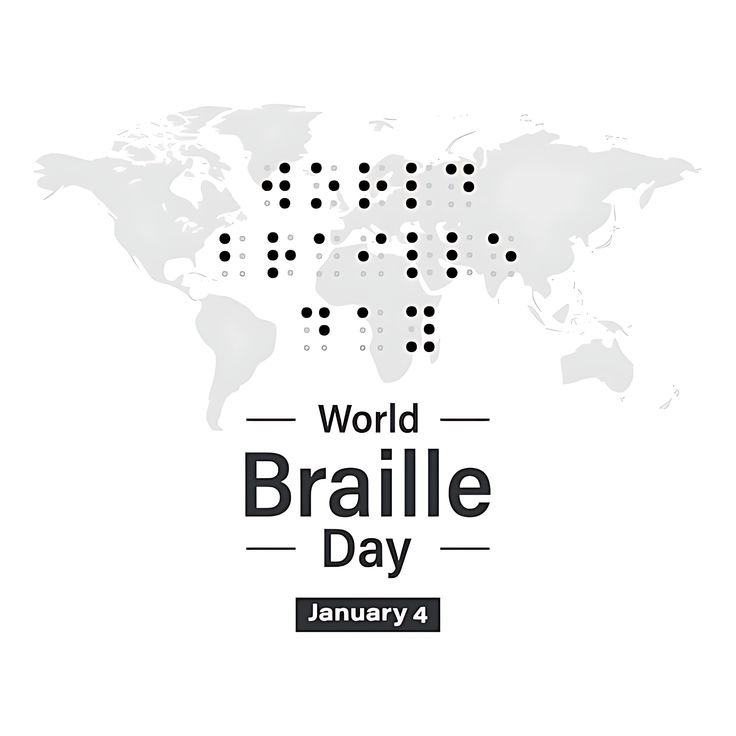
World Braille Day is observed every year on January 4 to honor the birth anniversary of Louis Braille, the inventor of the Braille writing system. This international observance highlights the importance of Braille as a vital means of communication for people who are blind or visually impaired. Recognized officially by the United Nations, World Braille Day is not merely a day of remembrance but a powerful reminder of the fundamental human right to access information, education, and communication.
Braille is more than a script—it is a bridge to independence, dignity, and equal participation in society. On this day, governments, educational institutions, disability rights organizations, and individuals around the world come together to promote awareness about accessibility and inclusive development.
Who Was Louis Braille?
Early Life of Louis Braille
Louis Braille was born on January 4, 1809, in Coupvray, France. At the age of three, he suffered an accident in his father’s workshop that resulted in the loss of vision in both eyes due to infection. Despite this life-altering challenge, Louis Braille showed remarkable intelligence and determination from a young age.http://www.truthfrontier.com
He earned a scholarship to the Royal Institute for Blind Youth in Paris, one of the first schools for blind students. However, the learning materials available at the time were extremely limited, bulky, and inefficient.http://www.aiims.com
Invention of the Braille System
Inspired by a military night-writing code developed by Charles Barbier, Louis Braille began working on a simplified tactile reading system. By the age of 15, he had developed what we now know as the Braille system, based on patterns of six raised dots arranged in a cell.
This system allowed blind individuals to read and write efficiently using their sense of touch. Although his invention was not widely accepted during his lifetime, Braille’s work later revolutionized education and communication for visually impaired people worldwide.
What Is the Braille System?
Structure and Function of Braille
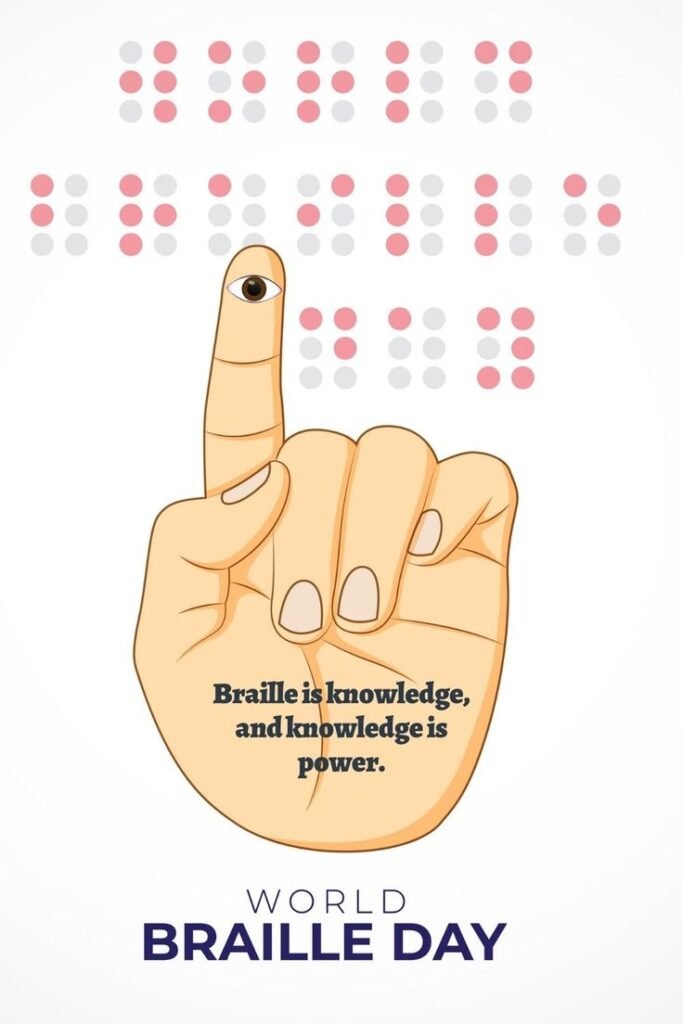
Braille is a tactile writing and reading system used by people who are blind or have severe visual impairment. Each Braille character, or “cell,” consists of six dots, arranged in two vertical columns of three dots each. Different combinations of these dots represent letters, numbers, punctuation marks, and even musical or mathematical symbols.
Braille is not a language; rather, it is a code that can be adapted to many languages, including English, Hindi, Arabic, French, and many more.
Importance of Braille Literacy
Braille literacy is directly linked to higher levels of education, employment, and independence among blind individuals. Studies and global disability organizations consistently emphasize that access to Braille improves cognitive development, communication skills, and self-confidence.
Why Is World Braille Day Important?
Promoting Human Rights and Equality
World Braille Day emphasizes that accessibility is a human right, not a privilege. Article 9 of the UN Convention on the Rights of Persons with Disabilities (CRPD) stresses the importance of access to information and communication technologies, including Braille.
By observing this day, the global community acknowledges the need to remove barriers that prevent visually impaired people from fully participating in social, economic, and political life.
Raising Awareness About Visual Impairment
According to global health estimates, millions of people worldwide live with visual impairment, and a significant portion of them rely on Braille for education and daily communication. World Braille Day helps spread awareness about their challenges, capabilities, and contributions to society.
Role of the United Nations in World Braille Day
UN Recognition and Global Advocacy
In 2018, the United Nations General Assembly officially proclaimed January 4 as World Braille Day. The UN recognized Braille as an essential tool for communication and education, especially for persons who are blind and deafblind.
The observance supports the broader goals of the 2030 Agenda for Sustainable Development, particularly in ensuring inclusive and equitable quality education for all.
Linking Braille to Sustainable Development Goals
World Braille Day aligns closely with several Sustainable Development Goals (SDGs), including:
SDG 4: Quality Education
SDG 10: Reduced Inequalities
SDG 16: Peace, Justice, and Strong Institutions
By promoting accessible information, Braille contributes to inclusive growth and social justice.
Braille in the Modern Digital Age
Technology and Digital Braille
With advancements in technology, Braille has evolved beyond paper. Refreshable Braille displays, Braille e-books, and screen-reading software now allow visually impaired individuals to access digital content in real time.
Smartphones, computers, and assistive technologies have integrated Braille compatibility, ensuring that blind users are not left behind in the digital revolution.
Challenges Facing Braille Today
Despite technological progress, Braille literacy rates remain low in many regions due to lack of resources, trained teachers, and awareness. Some mistakenly believe that audio technology alone can replace Braille, but experts stress that listening cannot fully substitute reading and writing skills.
World Braille Day addresses these misconceptions and calls for renewed investment in Braille education.
How World Braille Day Is Observed
Global Events and Activities
World Braille Day is marked by:
Educational seminars and workshops
Awareness campaigns and social media initiatives
Braille exhibitions and demonstrations
Policy discussions on disability inclusion
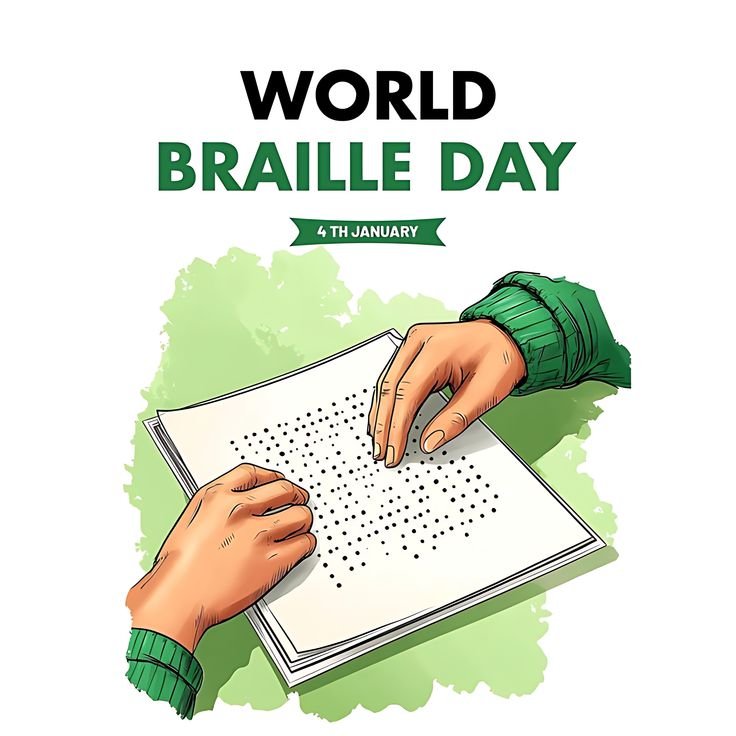
Schools and organizations often conduct interactive sessions to help sighted individuals understand how Braille works.
Role of Educational Institutions and Media
Educational institutions play a crucial role by promoting inclusive learning environments and accessible materials. Media coverage on World Braille Day helps amplify the voices of the visually impaired community and encourages positive social change.
The Importance of Inclusive Education
Braille as a Foundation of Learning
For blind children, Braille is equivalent to print for sighted children. It enables spelling, grammar, mathematics, and critical thinking skills. Without Braille, many visually impaired students face barriers to academic success.
Inclusive education systems that incorporate Braille ensure that no child is excluded due to disability.
Employment and Economic Independence
Braille literacy is closely linked to employment opportunities. Individuals who can read and write Braille are more likely to secure jobs, pursue higher education, and live independently. World Braille Day reinforces the connection between accessibility and economic empowerment.
Conclusion: A Day for Awareness and Action
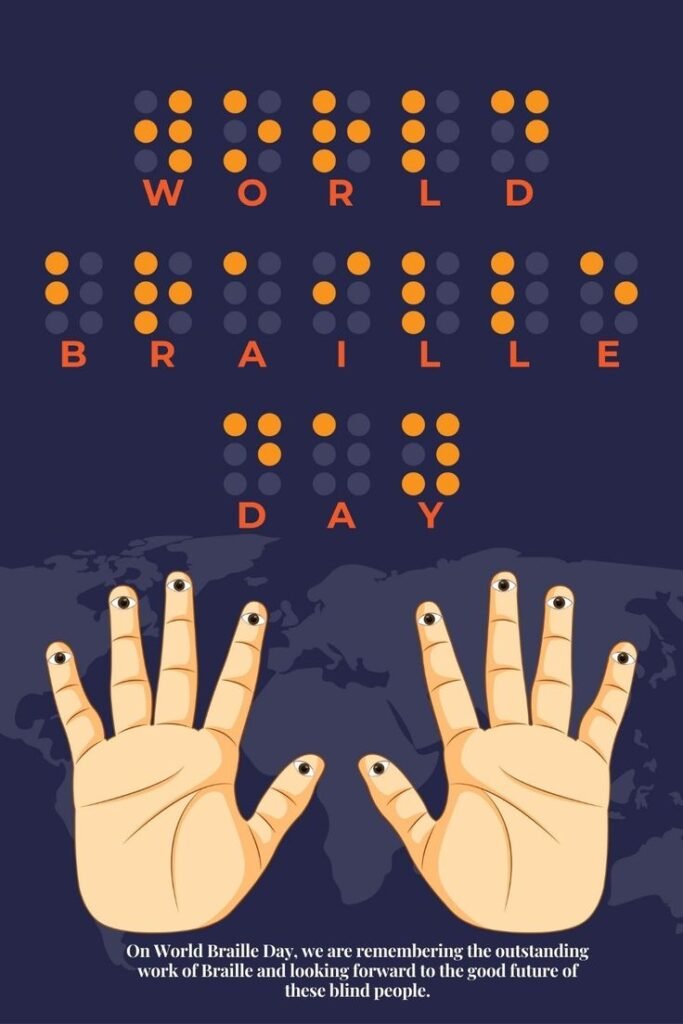
World Braille Day on January 4 is a global call to action for governments, institutions, and individuals to support accessibility, inclusion, and equal rights. It honors the legacy of Louis Braille, whose simple yet powerful invention transformed millions of lives.
By promoting Braille literacy and inclusive policies, societies can ensure that visually impaired individuals are not left behind. World Braille Day reminds us that true progress is measured not by how advanced a society is, but by how inclusive it is.
Accessibility benefits everyone, and Braille remains a timeless symbol of knowledge, dignity, and human resilience.