
🕯️ Introduction: The Festival That Unites Yet Divides by Dates
Diwali — also known as Deepavali, the festival of lights — is one of the most celebrated festivals in India and across the world. But if you’ve ever searched online for “When is Diwali this year?”, you’ve probably noticed something confusing:
some calendars show one date, while others list a completely different day.
So, why is Diwali celebrated on two different days? The reason lies in ancient astronomy, regional customs, and variations in the Hindu lunar calendar. Let’s explore this beautiful complexity step-by-step.
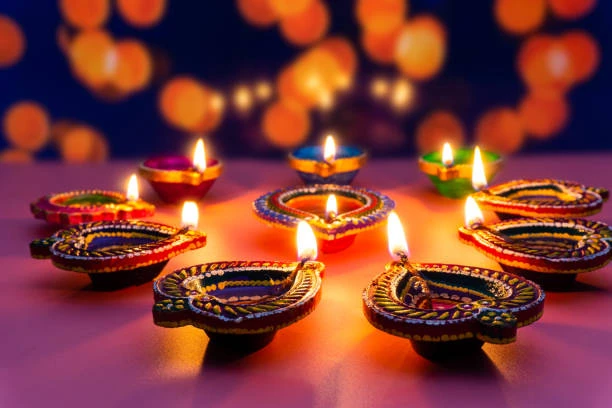
🌙 The Lunar Calendar and the Real Reason for the Date Difference
Unlike the Gregorian calendar, which follows the sun, most Hindu festivals are based on the lunar calendar — also known as the Panchang.
Diwali is celebrated on the Amavasya (new moon day) of the Kartika month — but the lunar cycle varies slightly across regions.
Because moonrise and sunset timings differ by region and time zone, the exact day of Amavasya may fall on two consecutive dates depending on your location.
👉 For example:
- In North India, if the new moon starts after sunset, the festival is observed the next day.
- In South India, people celebrate when Amavasya begins — even if it starts earlier in the evening.
This explains why Diwali can fall on October 30th in one state and October 31st in another!
check out the video October 21 or 22 diwali
🪔 Religious and Regional Differences in Diwali Celebrations
1. North India – Lord Rama’s Return
In North India, Diwali commemorates Lord Rama’s return to Ayodhya after defeating Ravana. The festival marks the victory of light over darkness and good over evil.
Here, Diwali is celebrated on Amavasya night, followed by Govardhan Puja and Bhai Dooj in the following days.
2. South India – Lord Krishna and Narakasura
In South India, especially in Tamil Nadu, Andhra Pradesh, and Karnataka, Diwali (or Deepavali) is linked to Lord Krishna’s victory over the demon Narakasura.
Here, celebrations start a day earlier — on Chaturdashi (Naraka Chaturdashi) — symbolizing the destruction of evil.
3. Western India – Lord Vishnu and Bali
In Gujarat, Diwali is celebrated as the day Lord Vishnu sent King Bali to rule the underworld, known as Bali Pratipada. It also marks the start of the new financial year for many Gujarati families.
4. Eastern India – Goddess Kali Puja
In West Bengal, Odisha, and Assam, Diwali coincides with Kali Puja — the worship of Goddess Kali, who destroys evil and protects her devotees.
Thus, while the rest of India lights diyas for Rama, Bengal lights them for Kali.

📅 Why the Diwali Date Changes Every Year
Diwali usually falls between mid-October and mid-November each year. The Hindu lunar calendar shifts in relation to the solar year, so the date is not fixed.
Every 2–3 years, there’s a leap month (Adhik Maas) added to the Hindu calendar to realign it with the solar calendar. This creates additional shifts, leading to regional differences in festival observances.
So even though it may seem inconsistent, this flexibility is what keeps Hindu festivals astronomically accurate.
🏠 Cultural Impact: One Festival, Many Traditions
The fact that Diwali is celebrated on two different days doesn’t divide India — it highlights the country’s cultural diversity and unity.
Whether it’s lighting diyas in Ayodhya, bursting crackers in Chennai, or performing Kali Puja in Kolkata, every tradition honors the same core message:
“The triumph of light over darkness, knowledge over ignorance, and good over evil.”
This diversity makes Diwali more than just a date — it’s a spiritual moment shared by millions, no matter which day they celebrate.
🪄 Lesser-Known Facts About Diwali Dates
- 🗓️ The NASA lunar calendar can predict the Diwali date decades in advance.
- 🌑 The Amavasya tithi (new moon) lasts only a few hours — hence the confusion.
- 🌍 Diwali dates vary globally — for instance, Diwali in the USA or UK often falls a day earlier than in India.
- 📜 Historical references to Diwali can be found in ancient Puranas, proving how old the lunar observance is.
- 🕯️ Some Sikh and Jain communities celebrate their own versions of Diwali with unique spiritual meanings.
🙏 Modern Understanding: Beyond Dates and Differences
Today, technology has made it easier to track regional Panchang timings, and most national calendars now publish both possible dates.
Ultimately, whether you celebrate on the first or second day, Diwali remains a symbol of:
- Hope and renewal
- Family and togetherness
- Faith in the light that guides us through darkness

🌟 Conclusion: One Spirit, Two Dates — One Meaning
So the next time someone asks, “Why is Diwali celebrated on two different days?”, you’ll know it’s not confusion — it’s diversity rooted in ancient astronomy and faith.
Across every home that glows with diyas, one truth remains:
“Light always wins, no matter the date.
Sikh Bandi Chor Diwas checkout the story


Join the discussion 2 Comments