Introduction
Apollo is one of the most important and complex gods in ancient Greek mythology. Known as the god of light, music, prophecy, healing, and knowledge, Apollo represents harmony, balance, and intellectual clarity. Unlike many other Olympian gods, Apollo was admired not only for his power but also for his beauty, wisdom, and discipline. Worshipped across the Greek world and later adopted by the Romans, Apollo played a central role in religion, art, medicine, and philosophy.
Origins and Family of Apollo
Birth of Apollo
Apollo was the son of Zeus, the king of the gods, and Leto, a Titaness. According to myth, Hera, Zeus’s wife, was angered by Leto’s pregnancy and forbade her from giving birth on solid land. Eventually, the floating island of Delos offered Leto refuge, where she gave birth to twins—Apollo and Artemis. This event made Delos one of the most sacred religious sites in ancient Greece.http://www.truthfrontier.com
Family Connections
Apollo’s twin sister Artemis was the goddess of the hunt and the moon, forming a symbolic balance between the siblings. While Artemis represented wilderness and independence, Apollo symbolized civilization, order, and enlightenment. His family lineage placed him among the Twelve Olympian Gods, granting him immense authority in divine affairs.http://www.bbcnews.com
Apollo’s Role Among the Olympian Gods
God of Light and Truth
Apollo is often associated with light, not merely as sunlight but as clarity, reason, and truth. He was believed to reveal knowledge and dispel ignorance. Over time, Apollo became closely connected with the Sun, although in early Greek mythology the Sun was personified by Helios.
God of Prophecy
One of Apollo’s most important roles was as the god of prophecy. He presided over the Oracle of Delphi, the most famous oracle in ancient Greece. People from across the Mediterranean traveled to Delphi to seek guidance from Apollo through his priestess, the Pythia.
Apollo and the Oracle of Delphi
Sacred Site of Delphi
Delphi was considered the center of the world by the ancient Greeks. According to myth, Apollo defeated the serpent Python, who guarded the site, and established his oracle there. This victory symbolized the triumph of order and reason over chaos.
Influence on Greek Society
The Oracle of Delphi influenced major political, military, and personal decisions. Kings, generals, and ordinary citizens consulted Apollo before wars, colonization efforts, and important life choices. His prophecies were often symbolic and required interpretation, reinforcing the belief that divine wisdom was complex and profound.
Apollo as the God of Music and Arts
Master of the Lyre
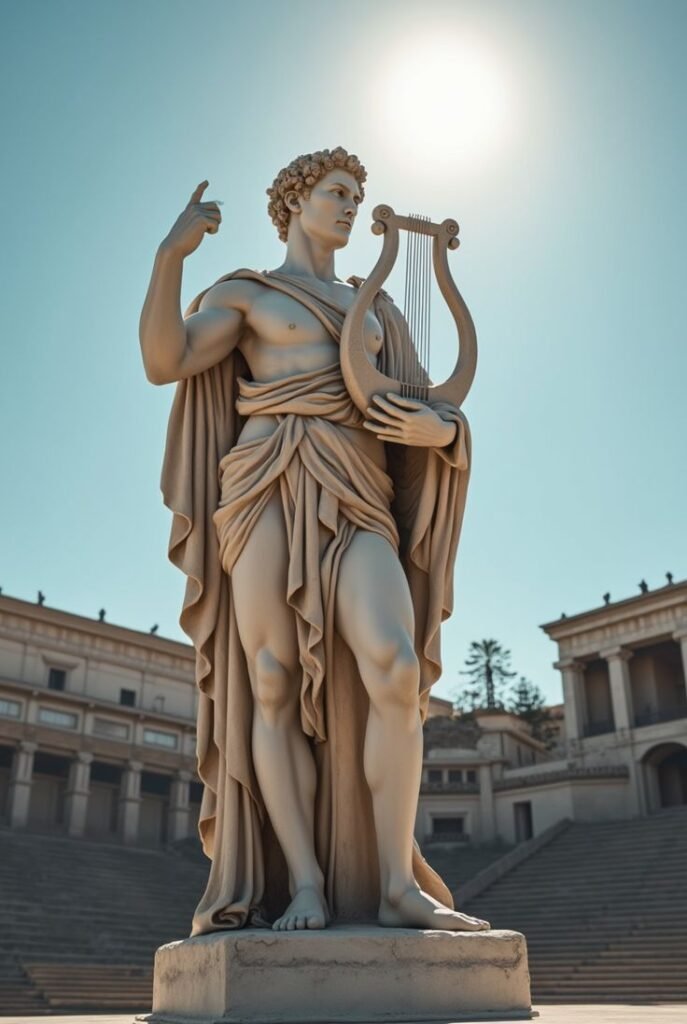
Apollo was the god of music, poetry, and artistic inspiration. He was often depicted holding a lyre, a stringed instrument associated with harmony and balance. According to myth, Apollo received the lyre from Hermes and became its greatest master.
Patron of the Muses
Apollo was closely linked with the Nine Muses, goddesses who inspired poetry, history, dance, and science. As their leader, Apollo represented the union of creativity and intellect. Ancient artists and poets often invoked Apollo for inspiration and guidance.
Apollo as a Healer and God of Medicine
Divine Healing Powers
Apollo was worshipped as a god of healing and disease prevention. He could bring illness as punishment but also remove it through divine favor. This dual role emphasized balance and moral responsibility in human life.
Father of Asclepius
Apollo was the father of Asclepius, the god of medicine. Asclepius became a symbol of medical knowledge and healing, and his staff remains a symbol of medicine today. Through Asclepius, Apollo’s influence extended deeply into ancient healthcare and scientific thought.
Apollo and Moral Order
God of Law and Discipline
Apollo represented law, order, and moderation. He was associated with self-control, ethical behavior, and rational thought. Greek philosophers often viewed Apollo as a symbol of intellectual discipline and moral clarity.
Apollo and Justice
Unlike gods driven by chaos or raw emotion, Apollo punished wrongdoing in measured ways. His justice emphasized correction rather than destruction, reflecting Greek ideals of balance and fairness.
Apollo in Myths and Legends
Apollo and Daphne
One of the most famous myths involves Apollo and the nymph Daphne. After Apollo mocked the god Eros, he was struck with a love arrow and fell deeply in love with Daphne, who wished to remain free. To escape him, Daphne was transformed into a laurel tree, which became sacred to Apollo.
Apollo and Marsyas
Apollo once competed in a musical contest against Marsyas, a satyr. Although Apollo won, the myth served as a warning against arrogance and disrespect toward the gods. These stories reinforced moral lessons in Greek culture.
Symbols and Sacred Animals of Apollo
Sacred Symbols
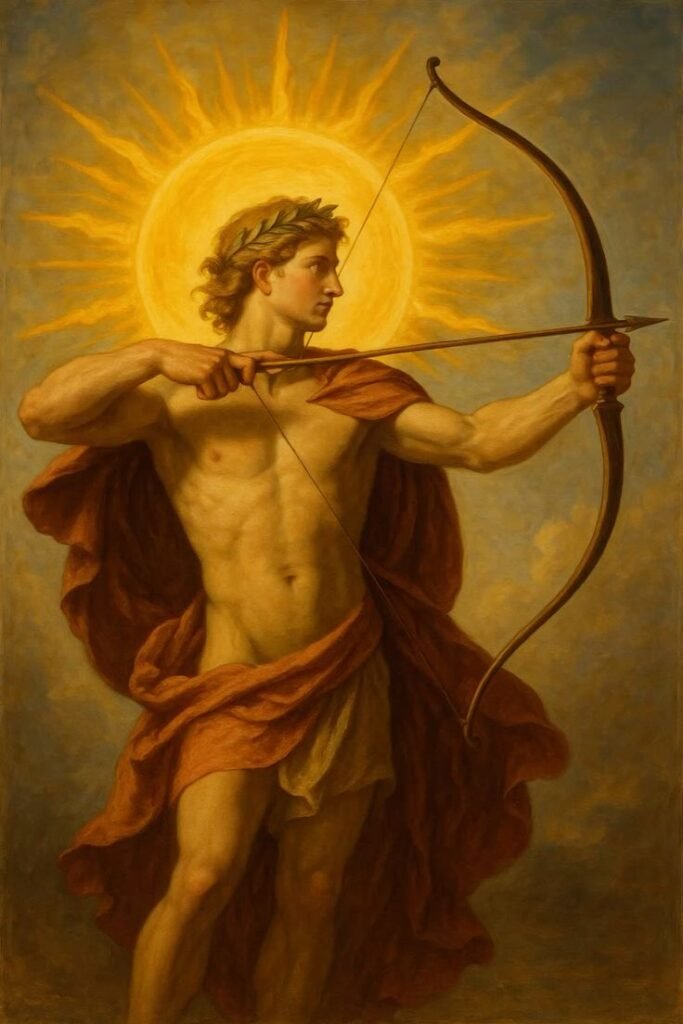
Apollo’s symbols include the lyre, laurel wreath, bow and arrows, and sunlight. The laurel wreath symbolized victory, wisdom, and poetic achievement.
Sacred Animals
Animals associated with Apollo include the raven, wolf, swan, and python. Each animal represented aspects of his nature, such as prophecy, protection, and transformation.
Worship and Festivals Dedicated to Apollo
Ancient Worship Practices
Apollo was worshipped across Greece, Asia Minor, and later Rome. Temples dedicated to him stood in Delphi, Delos, Corinth, and other major cities. Offerings included music performances, athletic competitions, and ritual sacrifices.
Festivals and Celebrations
Festivals such as the Pythian Games were held in Apollo’s honor. These games combined athletic contests with music and poetry, reflecting Apollo’s connection to both physical and intellectual excellence.
Apollo in Roman Mythology
Adoption as Apollo
Unlike many Greek gods who were renamed by the Romans, Apollo retained his name in Roman mythology. Roman emperors admired Apollo as a symbol of order, civilization, and imperial authority.
Influence on Roman Culture
Apollo became a patron of Roman art, poetry, and governance. His image was used to represent peace, enlightenment, and cultural refinement during the Roman Empire.
Legacy of Apollo
Influence on Art and Literature
Apollo has inspired countless works of art, literature, and music from ancient times to the modern era. Sculptures, paintings, and poems portray him as the ideal of beauty and intellect.
Symbol of Human Aspiration
Apollo symbolizes humanity’s pursuit of knowledge, harmony, and self-improvement. He represents the balance between emotion and reason, creativity and discipline.
Conclusion
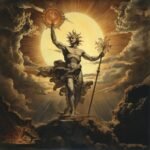
Apollo stands as one of the most influential figures in Greek mythology. As the god of light, music, prophecy, healing, and order, he embodied the highest ideals of ancient Greek civilization. His worship shaped religion, medicine, art, and philosophy, leaving a lasting legacy that continues to influence modern culture. Apollo’s enduring image reminds humanity of the power of knowledge, balance, and enlightened thought.