
Introduction
Crop circles have fascinated people around the world for decades. These large patterns appear in fields of crops, especially wheat, barley, and corn, often overnight. While some people have imagined mysterious causes like extraterrestrials or unknown natural forces, the overwhelming evidence shows that crop circles are human‑made phenomena. This article explains why crop circles are made, how they are created, and the scientific, social, and cultural context behind them in accurate, real‑world terms.
What Are Crop Circles?
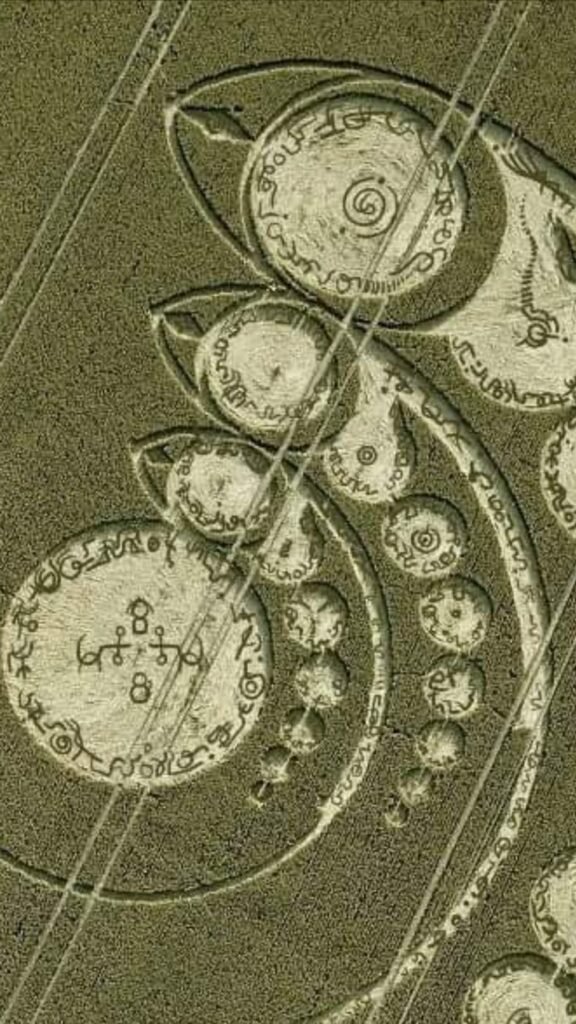
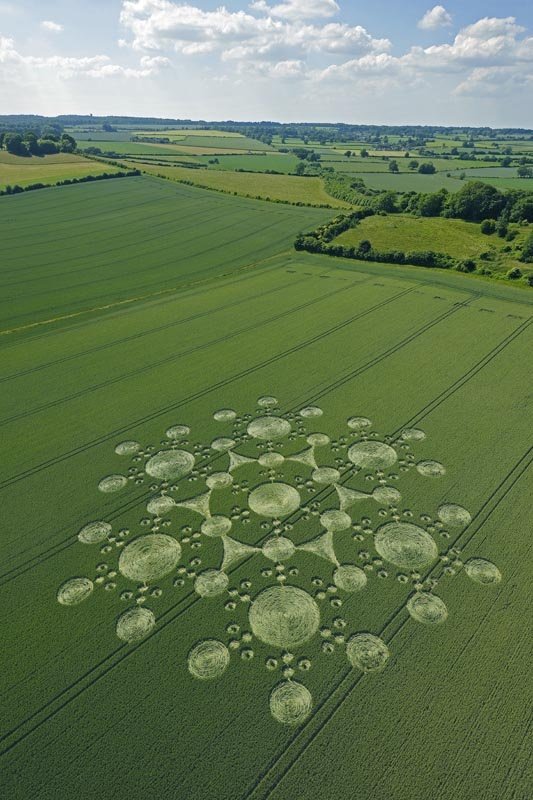
Crop circles are geometric patterns flattened into fields of growing crops. They range from simple circles to elaborate designs spanning hundreds of feet. Most appear during the growing season when plants are tall and flexible enough to bend without breaking. The flattened areas form noticeable shapes when seen from above, especially from hills, drones, or aircraft.
Origins of Crop Circle Interest
Early Reports and Modern Awareness
While occasional patterns in fields were recorded in history, crop circles gained global attention in the late 20th century. In the 1970s and early 1980s, reports of well‑defined shapes in southern England, especially around Wiltshire, brought widespread curiosity. Media coverage and aerial photography fueled interest, leading to speculation about mysterious causes.http://www.truthfrontier.com
Popular Myths and Speculation
Many early explanations included ideas like UFOs, plasma vortices, Earth energy fields, or supernatural forces. These theories were often sensationalized in books, documentaries, and news reports. However, over time, evidence has shown that such claims are unnecessary to explain crop circles.http://www.bbcnews
Why Crop Circles Are Made
Artistic Expression and Creativity
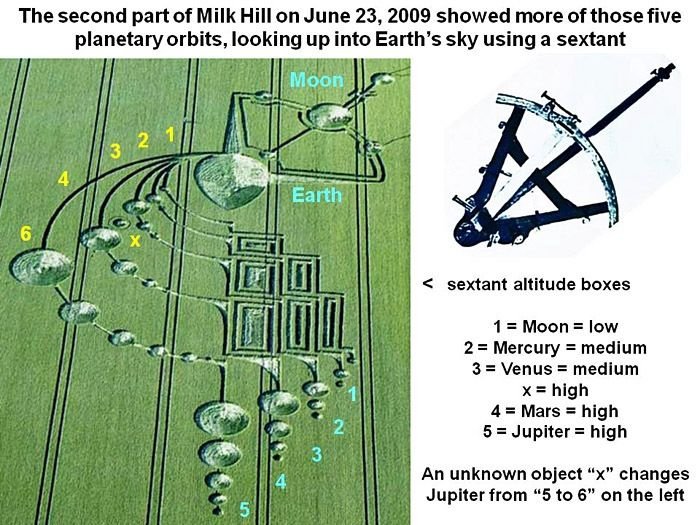
The most common reason crop circles are made is human creativity and artistic expression. Many crop circle makers view their work as land art. They enjoy designing intricate geometric patterns and creating large‑scale artworks that can only be fully appreciated from above. Crop circles can be seen as a unique form of collaborative, temporary art.
Hoaxes and Publicity
Some crop circles are created as hoaxes or to attract media attention, tourism, or public curiosity. For example, certain regions have become known for crop circles, drawing visitors who are curious to see the latest design. Local tourism groups sometimes benefit from the increased attention, leading to indirect economic motivation.
Social and Cultural Phenomenon
Crop circles have become part of modern cultural expression. For some makers, creating crop circles is a social activity, involving teams of people who plan, design, and execute patterns together. These activities can build community and shared identity among participants.
Debunking Paranormal Motivations
Although paranormal explanations persist in some circles, researchers and makers themselves have repeatedly shown that most crop circles are created by people using simple tools and planning. Scientific investigation has not found evidence that unusual forces are involved in the vast majority of cases.
Who Makes Crop Circles?
Known Crop Circle Artists
Several individuals and groups have openly identified themselves as crop circle creators. In the early 1990s, two men from England, Doug Bower and Dave Chorley, admitted to making many of the famous patterns using simple methods. Their confession and demonstration of the techniques helped clarify that human activity was responsible for many discoveries.
Enthusiasts and Teams Worldwide
Today, crop circle makers come from diverse backgrounds and countries. Some work alone, and others form small teams. They often share designs or collaborate on complex patterns. Crop circle communities exist online and offline, where people discuss design, execution, and artistic inspiration.
Anonymous vs. Public Creations
While some makers reveal their identity and explain their work, others choose to remain anonymous. The choice to remain hidden can be part of the culture of crop circle creation, adding a sense of mystery and tradition.
How Crop Circles Are Made
Tools and Basic Techniques
Most real‑world crop circles are made using basic tools that do not damage the crops permanently. The most common tools include:
Planks of wood with rope handles: Used to press down the crops.
Measuring ropes and stakes: To create precise circles and geometric proportions.
String and surveying tools: To maintain symmetry and layout accuracy.
These tools allow makers to flatten crops cleanly without breaking stems, producing smooth, continuous patterns.
Step‑by‑Step Process of Creation
Planning the Design
Crop circle creation begins with a design phase. Makers sketch the pattern on paper or use digital tools to plan the shapes, angles, and dimensions. Designs may be based on geometry, symbolism, or artistic preference.
Choosing a Field and Timing
Makers select an open field with tall, healthy crops and few obstacles. Timing is important: most crop circles are made at night to avoid detection and to preserve the surprise element. Nighttime work also heightens the sense of mystery experienced by observers the next morning.
Marking the Layout
Makers drive stakes into the ground at key points and use ropes to measure distances and curves. Starting from a center point, they work outward, marking where circles or lines should be formed. Careful measurement ensures the final pattern is proportionally accurate.
Flattening the Crops
Using the plank and rope method, makers press down the crops systematically. One person holds the rope handles and steps on the plank to flatten the plants, while another guides direction and alignment. This process is repeated throughout the design until the full pattern is formed.
Advanced Methods and Technology
Some crop circle creators use more advanced tools like GPS devices, laser pointers, and digital mapping software to increase precision. However, even sophisticated designs remain physically created by humans using mechanical methods.
Scientific Studies of Crop Circles
Material and Physical Analysis
Researchers have studied the physical properties of crops within circles. In many human‑made circles, the plant stems are bent, not broken, with nodes intact. This bending occurs from controlled pressure rather than unknown energy forces. Laboratory analysis supports the conclusion that crop circles are mechanically created.
Patterns and Geometry
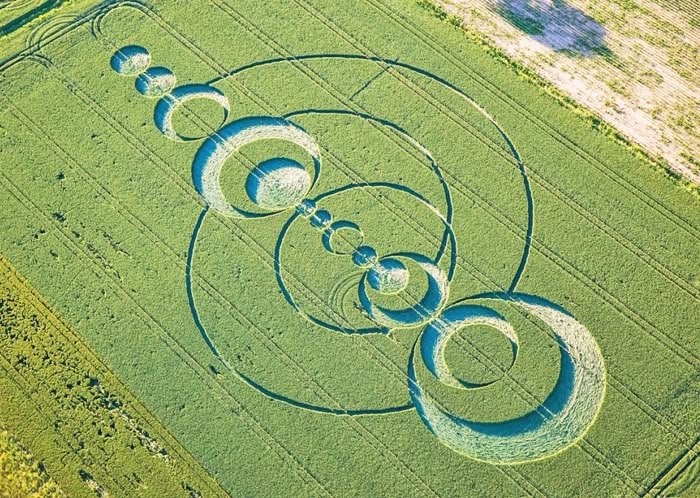
Crop circle designs often include mathematical elements such as circles, spirals, fractals, and symmetry. The complexity of some patterns reflects careful planning and mathematical knowledge rather than random natural processes.
Misinterpretations and Pseudoscience
Some fringe theories suggest crop circles contain coded messages, energy imprints, or unusual electromagnetic effects. Scientific investigations have not verified these claims. In well‑documented cases, the patterns can be traced back to human creators and explainable physical causes.
Cultural Impact and Public Perception
Media Representation
Crop circles story have appeared in films, TV shows, books, and art. Popular culture has embraced them as symbols of mystery and intrigue. This portrayal has contributed to mythologizing crop circles, even though real‑world explanations are grounded in human activity.
Tourism and Local Economy
In areas known for crop circles story tourism can increase during the season when new patterns appear. Visitors come to photograph designs, explore rural landscapes, and attend local events. This interest can benefit farmers and nearby communities.
Respect and Legal Considerations
Farm Damage and Consent
While crop circles story can draw attention, they can also damage crops. Responsible crop circle makers seek landowner permission before entering fields. Trespassing and damaging crops without consent can be illegal and harmful to farmers’ livelihoods.
Ethical and Safety Notes
Crop circle creation involves working at night and navigating uneven terrain. Safety, respect for property, and clear communication with landowners are essential for ethical participation.
Conclusion
Crop circles are a fascinating real‑world phenomenon rooted in human creativity, art, and cultural expression. While myths and pseudoscience have surrounded them, reliable evidence shows that crop circles are made by people using simple tools and well‑planned techniques. They represent a blend of design, geometry, collaboration, and cultural interest rather than secret forces or extraterrestrial activity. By understanding why and how crop circles are made, we can appreciate them as a unique form of modern land art grounded in real life.