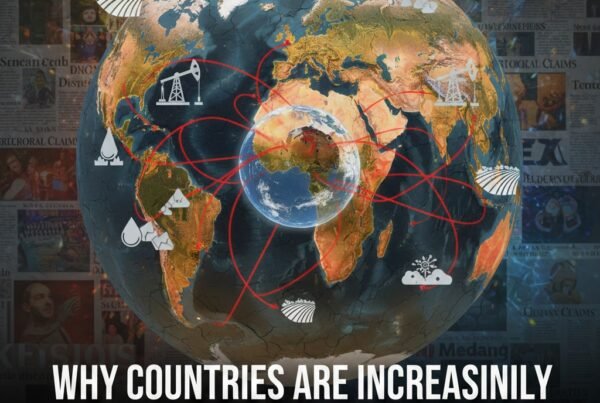
The New World Order (NWO) is a term often used in conspiracy theories which hypothesize a secretly emerging totalitarian world government.

The phrase “New World Order by rape of history” is associated with a specific conspiracy theory that alleges a cabal of elites is deliberately manipulating historical events to establish a totalitarian global government. It is not a phrase used in mainstream historical or political discourse, but rather a concept that exists within fringe, conspiratorial circles.
Key aspects of the conspiracy theory
- Elite control: Proponents of this theory believe that a small, powerful group controls major governments, industries, and media to bring about a “New World Order” of their own design.
- Fabricated crises: This cabal allegedly manufactures global events, such as pandemics or mass shootings, and controls the associated narratives to foster civil unrest and push their agenda. The COVID-19 pandemic, for example, is seen by some adherents as a manufactured crisis used to exert control.
- Manipulation of history: The “rape of history” component refers to the claim that these powerful forces intentionally distort or misrepresent historical events to serve their own interests. This is a common element in literature that challenges established historical narratives.
- Antisemitic roots: Many modern New World Order conspiracy theories incorporate antisemitic narratives, falsely claiming that Jewish people and families like the Rothschilds are behind global crises and financial institutions. The debunked text The Protocols of the Elders of Zion, which alleges a plan for Jewish world domination, is often cited by these theorists.
- Overlap with other theories: The concept is often combined with other conspiracy theories, including those about the Illuminati, the “Great Reset,” and various forms of extremism. This creates a broad, interconnected set of conspiratorial beliefs.
The book Rape of History
One specific instance of this phrase is in the title of a book by author Kewal Kaloti. The book, written in Punjabi, reportedly explores the concept of the New World Order, arguing that powerful forces have manipulated history for their own gain. It highlights how certain historical narratives are constructed to serve the interests of dominant powers, often at the expense of indigenous cultures and common people
Origins in conspiracy culture
The idea of a New World Order is not new, but it has evolved over time.
- Pre-Cold War: For much of the 20th century, politicians like Woodrow Wilson and Winston Churchill used the term “new world order” in a benign sense, referring to a new era of global cooperation following the world wars. International bodies like the League of Nations and the United Nations were formed with this vision in mind.
- Cold War: Right-wing countercultures began to associate the term with a conspiratorial plot to form a totalitarian world government. This included fears of a global communist or collectivist regime controlled by international bankers and politicians.
- Post-Cold War: After the collapse of the Soviet Union, the focus of the conspiracy shifted from communists to “globalists,” suggesting a plot by an oligarchy of international bankers, politicians, and corporations. Organizations like the United Nations, the World Economic Forum, and others are often cited as vehicles for this alleged plan.
Key figures and books
Several authors and commentators have popularized this narrative over the years:
- Pat Robertson’s The New World Order (1991): This bestselling book helped popularize the idea among the Christian right in the United States.
- Kewal Kaloti’s Rape of History: A book in Punjabi that explores the concept from a different cultural perspective, arguing that powerful forces have distorted history to serve their interests.
Allegations of distorted history
The “rape of history” element of the theory suggests that historical narratives are rewritten to control the population. Tactics allegedly used by the cabal include:
- Fabricated crises: Manufacturing events like pandemics or financial collapses to create a state of emergency that allows for more control.
- Controlling the narrative: Manipulating media and information to shape public perception of these events.
- Erasing cultural heritage: Intentionally suppressing or misrepresenting history, particularly the stories of indigenous cultures and common people, to centralize power.
Antisemitic connections
Many New World Order conspiracies incorporate antisemitic tropes, echoing the discredited Protocols of the Elders of Zion.
- Accusations of Jewish control: These theories often claim that Jewish banking families, such as the Rothschilds, or prominent Jewish individuals like George Soros, are pulling the strings behind global events.
- Fueling extremism: The promotion of such narratives poses a real-world danger, as they are often associated with extremist and militia movements that incite hatred and violence.
Debunking the theory
Academic and factual resources consistently expose the flaws in New World Order conspiracy theories.
- Circular reasoning: Conspiracy theories often rely on circular logic, where any evidence against the theory is reinterpreted as proof that the conspiracy is hiding something.
- Lack of evidence: Despite decades of claims, no credible evidence has ever proven the existence of a global cabal working toward a totalitarian world government.
- Historical context: The elements of the New World Order theory—ranging from fear of Freemasons and the Illuminati to globalist and antisemitic themes—can all be traced back to earlier historical periods and have been repeatedly debunked.
Contemporary elements of the conspiracy
- Political events: Populist figures like Donald Trump have been accused of using the “New World Order” and similar conspiratorial rhetoric to consolidate power and create an “us versus them” mentality. In some analyses, alliances between leaders like Trump and Russia’s Vladimir Putin are framed as a new world order that challenges the traditional Western-led order. In China, President Xi Jinping has called for a new world order that criticizes U.S. global leadership and unilateralism.
- Expansion of scope: Recent crises, including the COVID-19 pandemic and the war in Ukraine, have been absorbed into the conspiracy’s narrative. Adherents claim these are manufactured events used by elites to exert greater control over the populace and promote a dystopian, totalitarian surveillance state.
- Weaponization of social media: Social media platforms have become a primary vehicle for spreading “New World Order” narratives. Algorithms can amplify conspiratorial content, helping it reach mainstream audiences and connect with other movements like QAnon. This creates an echo chamber effect that can radicalize beliefs and even incite violence.
- Convergence with other theories: The “New World Order” is now a “superconspiracy” that integrates with other narratives, including:
- The “Great Reset”: A belief that global elites are using the pandemic and economic instability to transform the world in their own favor.
- Transhumanism: A fear that a “posthuman ruling caste” is using technology for social control.
- The “Great Replacement”: An antisemitic and xenophobic theory alleging a coordinated plot to replace white populations with non-white immigrants.
- Continued antisemitic undertones: Despite their evolution, many modern “New World Order” conspiracies retain their historic antisemitic roots. Figures like George Soros and families like the Rothschilds are frequently invoked as alleged architects of global crises, echoing the fabricated Protocols of the Elders of Zion.
Real-world impact
- Erosion of trust: The constant propagation of these narratives, often through social media, contributes to a decline in public trust in democratic institutions, science, and the media.
- Incitement of violence: Conspiracy theories have been cited by domestic extremists as a motivation for criminal and violent acts. This demonstrates how online radicalization can manifest in real-world danger.
- Divisive “War on Truth”: The spread of conspiracies can be a strategy by some political elites to delegitimize all sources of information, further polarizing society.
Recent evolution of the theory
- Incorporation of modern crises: The theory has evolved to incorporate recent events, such as the COVID-19 pandemic and the war in Ukraine. Adherents claim these crises were manufactured to impose social control, including mandatory vaccinations or the creation of a “dystopian international governing structure”.
- Link with “The Great Reset”: The “New World Order” narrative has been increasingly linked to the World Economic Forum’s “Great Reset” initiative, reinterpreting legitimate policy discussions as a sinister plot.
- Expanded scapegoating: While maintaining its historic antisemitic roots, the theory now targets a broader set of scapegoats. It portrays figures like Bill Gates and George Soros as part of the supposed cabal, accusing them of orchestrating global crises.
- Fusion with other theories: The NWO theory now functions as a “superconspiracy,” incorporating elements from QAnon, neo-Luddite, and transhumanist movements.
- Amplification on social media: The proliferation of these narratives is heavily fueled by social media platforms, whose algorithms can steer users toward more extreme content. This online radicalization can normalize hateful narratives and even incite real-world violence.
Real-world impact and consequences
- Political polarization: The anti-establishment and anti-elite rhetoric of the NWO theory contributes to political distrust and polarization.
- Domestic extremism: The FBI has noted that such conspiracy theories can motivate domestic extremists to commit criminal and violent acts. Incidents have included plans to attack government facilities based on false pretenses, such as a belief that a HAARP facility was part of an NWO plot.
- Erosion of democratic trust: By claiming that historical events are lies orchestrated by a hidden group, the theory erodes public trust in democratic institutions and the integrity of shared history itself. It can make some people question widely accepted facts, like the legitimacy of elections or the reality of historical atrocities.
International context
- Authoritarian state media: Some authoritarian regimes, including China and Russia, use disinformation strategies that echo similar anti-Western and anti-globalist narratives. State-sponsored campaigns manipulate social media to weaken trust in democracies and promote a “multipolar” alternative to Western leadership.
- Weaponizing pseudohistory: China’s state media has even promoted Russian-inspired pseudohistory, questioning the authenticity of ancient Greek, Roman, and Egyptian history. This tactic further reinforces the idea that historical records are unreliable or fabricated, serving authoritarian regimes by controlling the narrative.
The modern evolution of the theory
- Incorporation of current crises: Recent crises, including the COVID-19 pandemic and the war in Ukraine, have been absorbed into the “New World Order” narrative. Followers of the conspiracy have claimed these events were manufactured by a shadowy elite to seize more power and implement a global surveillance state.
- Blending with other narratives: The theory now often combines with other popular conspiracy theories, such as:
- The “Great Reset”: Interpreting the World Economic Forum’s initiative as a plot to deliberately cause economic collapse.
- QAnon: Adherents are convinced a “satanic cabal of elites” is engaging in child sex trafficking.
- Shifting scapegoats: While still retaining historic antisemitic narratives—echoing the fabricated Protocols of the Elders of Zion—the theory also targets broader scapegoats. Prominent figures like Bill Gates and George Soros are frequently singled out for blame.
- International variations: Some authoritarian regimes, such as those in Russia and China, deploy disinformation that aligns with the anti-Western and anti-globalist sentiment of this theory. This tactic uses pseudohistory to question established historical narratives and sow distrust in democracies.
Real-world consequences of the conspiracy
- Radicalization and extremism: The theory continues to motivate real-world extremist and militia groups. Online radicalization can lead to criminal and violent acts, such as the bombing in Nashville in 2020 by a man who believed in a similar “reptilian” conspiracy that overlaps with NWO theories.
- Social media’s role: Social media platforms play a critical role in the theory’s spread by creating echo chambers and amplifying misinformation through algorithms. This constant exposure to misinformation, often from trusted social media influencers, reinforces conspiratorial beliefs, making them resistant to factual correction.
- Political polarization: The anti-establishment rhetoric and erosion of public trust fueled by the theory contribute to a more politically polarized society. It presents a “us versus them” mentality that makes constructive dialogue and compromise more difficult.
Modern adaptations and themes
- Response to recent global crises: Modern adherents of this conspiracy theory have integrated recent events, such as the COVID-19 pandemic and global economic instability, into their narrative. They frame legitimate public health measures and economic shifts as engineered events meant to exert control over the population.
- Overlap with other conspiracies: The “New World Order” narrative has merged with other prominent conspiracy theories, becoming a “superconspiracy”. For instance, it frequently links with themes from QAnon and the “Great Reset,” portraying them as part of a larger plan for a totalitarian surveillance state.
- Persistent antisemitism: The conspiracy theory maintains its historic antisemitic roots, blaming Jewish banking families like the Rothschilds and figures like George Soros for global crises. It often draws on the fabricated text The Protocols of the Elders of Zion as false “proof” of a plot for world domination.
Consequences in the current era
- Political polarization: The anti-establishment rhetoric of the “New World Order” conspiracy fuels political polarization. It frames global events in terms of an “us versus them” mentality, eroding public trust in democratic institutions.
- Radicalization and extremism: The spread of such narratives contributes to online radicalization and can motivate real-world extremist and violent behavior. The amplification of this content via social media normalizes hateful and baseless narratives.
- Erosion of trust: By falsely claiming that historical events and mainstream media reports are intentionally manipulated, the conspiracy theory undermines public faith in established sources of information.
Social media’s role
Social media platforms significantly facilitate the spread and evolution of the “New World Order” conspiracy:
- Algorithmic amplification: Platform algorithms can inadvertently push users toward more extreme content, creating echo chambers that reinforce conspiratorial thinking.
- Targeted misinformation: Modern technologies allow for the precise targeting of misinformation to specific audiences, increasing its potential impact.
- Challenge to gatekeepers: Social media bypasses traditional gatekeepers of information, allowing unsupported and sometimes dangerous theories to reach large audiences quickly.
The fringe conspiracy theory of a “New World Order by rape of history” alleges that a shadowy group of elites manipulates global events and distorts history to form a totalitarian world government. While completely unsubstantiated, this belief has evolved in recent years, drawing from contemporary crises and using social media to reach wider audiences.
Modern evolution of the theory
- Incorporation of modern crises: Adherents have integrated global events like the COVID-19 pandemic and the war in Ukraine into their narrative. They claim these were manufactured crises intended to impose social control through measures like mandatory vaccinations or economic shifts.
- Overlap with other conspiracies: The “New World Order” has expanded into a “superconspiracy” that merges with other movements. It is often linked with QAnon, which alleges a cabal of Satan-worshipping elites, and with interpretations of the World Economic Forum’s “Great Reset” initiative.
- Weaponization of social media: Social media is a primary vehicle for spreading these narratives, allowing for algorithmic amplification that creates echo chambers and drives radicalization. This online exposure normalizes and validates extremist ideas that were once confined to the fringes.
- Persistent antisemitism: The conspiracy retains its historic antisemitic roots, frequently portraying wealthy Jewish individuals or families, such as George Soros and the Rothschilds, as the architects of global crises. This draws upon antisemitic forgeries like The Protocols of the Elders of Zion.
Consequences and impacts
- Erosion of democratic trust: The theory undermines faith in democratic institutions, mainstream media, and science by portraying them as controlled by a secretive, malevolent force. This distrust can foster political apathy and fuel anti-government sentiment.
- Radicalization and extremism: The FBI and academic studies have documented a link between such conspiracy theories and the motivation for criminal acts and extremist violence. The false narratives can intensify group polarization and cast violence as a necessary measure to fight the perceived threat.
- Authoritarian propaganda: Authoritarian regimes sometimes exploit or echo aspects of these conspiracies to promote their own narratives. By emphasizing foreign threats or internal enemies, they can justify and reinforce their power.
Academic and expert debunking
- Lack of credible evidence: Experts confirm there is no credible evidence to support the existence of a global cabal plotting to create a totalitarian world government.
- Psychological vulnerabilities: Psychological research shows that people are often drawn to conspiracy theories to satisfy epistemic, existential, or social needs, particularly during periods of uncertainty or perceived powerlessness.
- Evolution of misinformation: Researchers have analyzed how online misinformation operates as an evolutionary paradox, with false narratives blending with kernels of truth to remain persuasive and resilient against debunking efforts.