
How the Recent Ethiopian Volcano Eruption Could Influence New Delhi’s AQI
Introduction
The recent eruption of the Hayli Gubbi volcano in Ethiopia has sparked widespread concern, particularly in New Delhi, as satellite images show its ash cloud drifting over India. While Delhi already struggles with hazardous air quality during the winter months, many are wondering: Could volcanic ash worsen Delhi’s AQI (Air Quality Index)? In this article, we explore how volcanic eruptions affect air pollution, assess the potential impact on Delhi, and suggest what residents should watch out for.
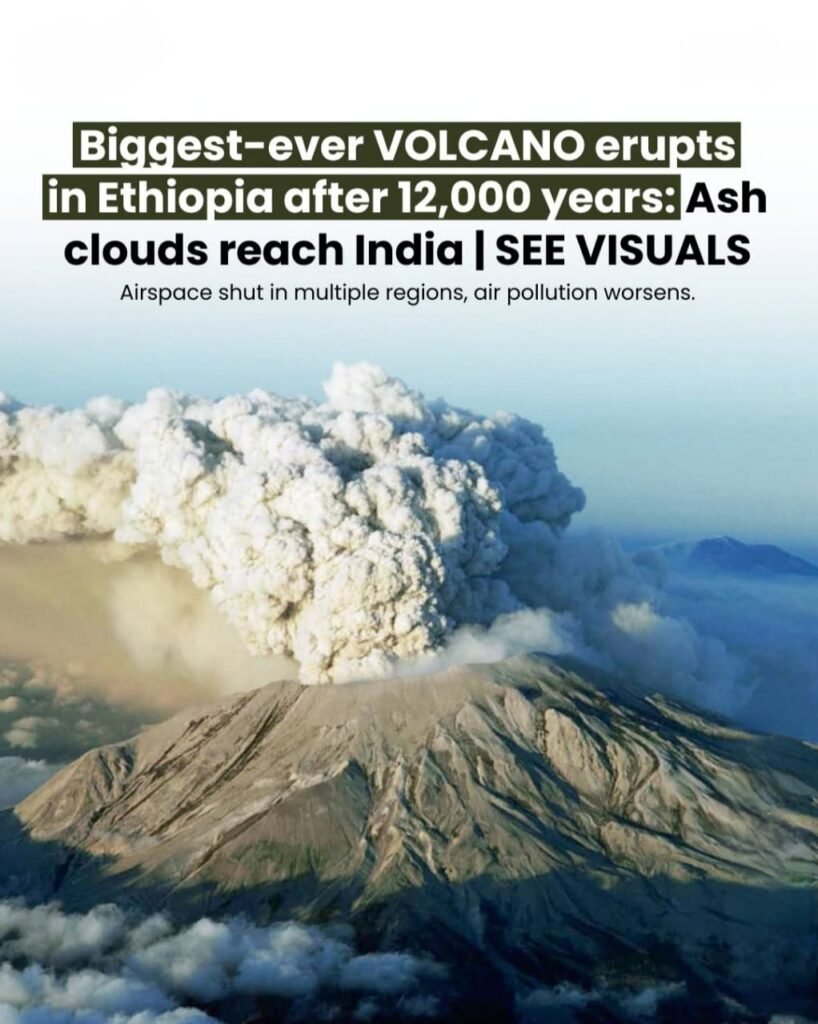
What Happens When a Volcano Erupts: Air Pollution Mechanisms
When a volcano erupts, it doesn’t just spew lava. It releases a complex mix of volcanic ash, gases, and ultra-fine particles into the atmosphere. Key pollutants include:
Sulfur dioxide (SO₂): This gas reacts with water vapor to form sulfate aerosols, sometimes called vog (volcanic smog).
Fine ash particles: These are often microscopic, similar to PM₂.₅.
Other gases: Hydrogen chloride, hydrogen fluoride, carbon dioxide, and trace gases can also be emitted.
These pollutants can degrade air quality significantly. Volcanic ash reduces visibility, irritates the lungs, and can trigger respiratory conditions. The health impacts are real: short-term exposure can cause coughing, wheezing, eye irritation, and breathing difficulty. Long-term exposure, especially to very fine ash or crystalline silica, may raise risks of chronic lung conditions.
The Hayli Gubbi Ash Cloud Over Delhi: What Experts Are Saying
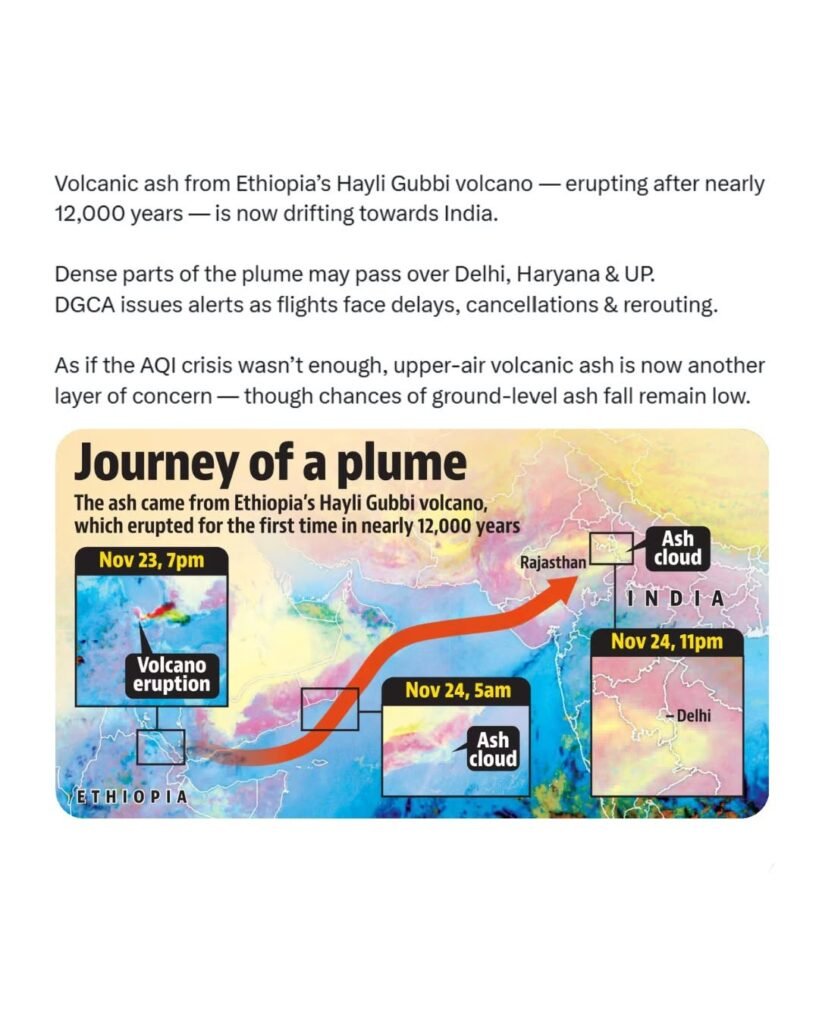
In late November 2025, ash plumes from the Hayli Gubbi volcano drifted across the Red Sea, through the Middle East, and into parts of northwestern India — including the Delhi-NCR region. Authorities have closely monitored the situation because Delhi’s AQI was already in the very poor to severe range.
However, meteorological experts from the India Meteorological Department (IMD) have largely reassured the public: the ash layer is high up — 8.5 km to 15 km above the surface, well above the atmospheric boundary layer where most of Delhi’s pollution accumulates.
Because of this altitude, any direct impact of ash particles on ground-level air quality is likely to be marginal. That said, the thin layer of ash could slightly alter sky appearance (making for hazy sunrises or redder skies) and might even modestly influence nighttime temperatures by acting like a high-altitude cloud.
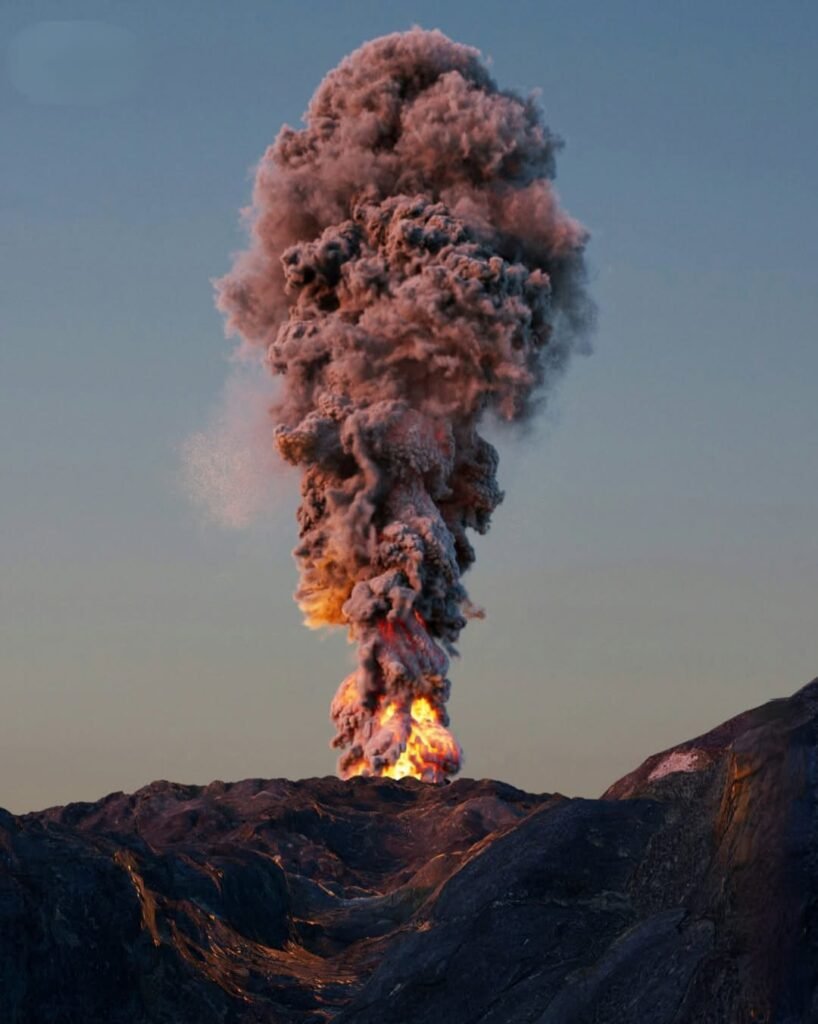
Health Risks to New Delhi Residents: Is There Cause for Alarm?
Although the majority of the ash remains aloft, experts caution that potential health risks cannot be entirely ruled out:
- Respiratory irritation: If finer ash or sulphurous gases descend, they may irritate eyes and airways, especially for people with asthma or other respiratory conditions.
- Toxic haze (vog): SO₂ from the volcano can combine with moisture to form a dangerous haze.
- Longer-term exposure: Though less likely in this event, exposure to crystalline silica in ash over time can contribute to chronic lung diseases.
- Psychological stress: The uncertainty around ashfall, health impact, and visibility can heighten anxiety, especially in a city already grappling with persistent pollution.
Still, according to the International Volcanic Health Hazard Network (IVHHN), the risk for Delhi is lower than for regions closer to an eruption — this is because the plume here remains mostly at high altitudes.
Why the AQI Spike Might Not Be Mainly Due to the Volcano
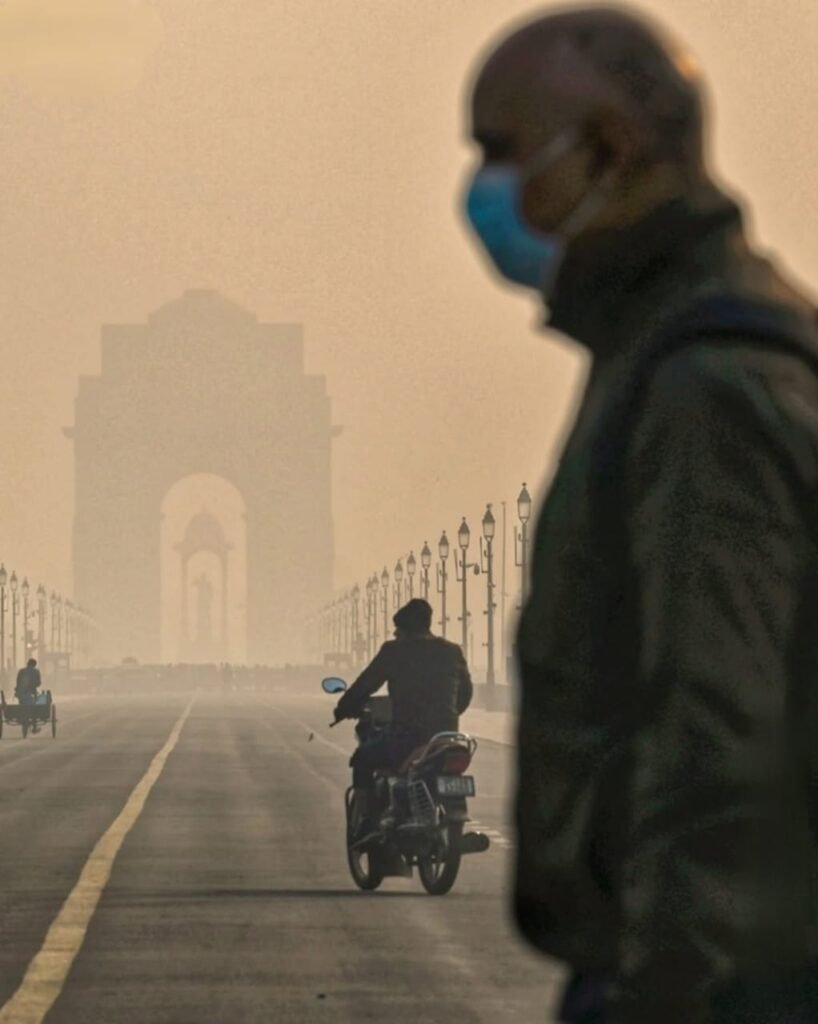
It’s important to contextualize: Delhi’s current high AQI is driven primarily by local and seasonal sources — not just international ash. According to IMD and local pollution experts:
Temperature inversion and shallow boundary layer: In winter, Delhi’s boundary layer (the layer of air near the ground) becomes very shallow (100–300 meters), trapping pollutants.
Local emissions: Vehicular emissions, industrial activity, and regional stubble burning remain dominant contributors to PM₂.₅ levels. (As supported by recent causality studies on Delhi’s air pollution.)
Short-lived ash influence: Meteorologists forecast that the ash layer will move away from Indian airspace soon, reducing any prolonged impact.
What Residents of Delhi Should Do
Even if the ash’s ground-level impact is likely small, precaution remains wise:
- Monitor AQI updates daily through trusted platforms like the CPCB Sameer app.
- Limit outdoor exposure when AQI is very poor or severe. Wearing masks (N95 or better) can help reduce inhalation of fine particles.
- Keep indoor air clean: Close windows, use air purifiers, and clean air filters regularly. During volcanic ashfall events, reducing intake of outdoor air can limit exposure.
- Vulnerable groups — children, older adults, and those with respiratory or cardiovascular conditions — should especially avoid strenuous outdoor activity until air quality improves.
- Stay informed: Follow updates from IMD and health agencies. If symptoms like breathing difficulty, coughing, or irritation worsen, consult a doctor.
Conclusion
The volcanic eruption of Ethiopia’s Hayli Gubbi volcano has understandably raised alarms in New Delhi, a city already under the burden of seasonal air pollution. However, experts suggest that the ash cloud’s effect on Delhi’s ground-level AQI is likely limited, since the plume remains at high altitudes. While there may be minor indirect impacts — like hazy skies or slight temperature shifts — the main drivers of hazardous air in Delhi remain local emissions and meteorological conditions.
Still, the situation is a potent reminder of how distant natural events can intersect with urban environmental crises. It underscores the importance of real-time air quality monitoring, public health readiness, and strong local pollution controls. For Delhi residents, staying informed, minimizing exposure, and taking simple preventive measures can help navigate this unusual convergence of volcanic activity and smog.






Join the discussion 2 Comments